
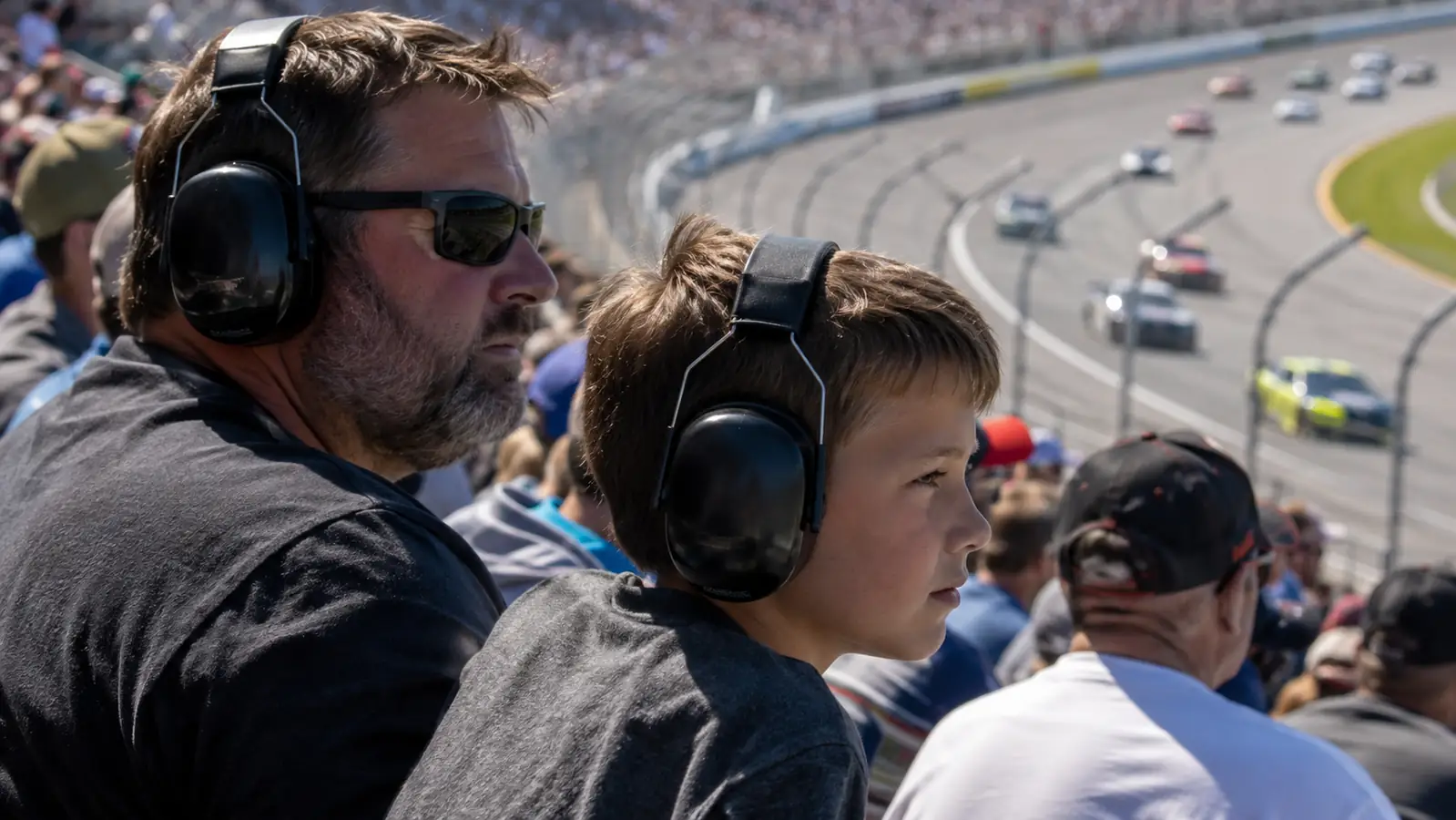
I put my Peltor Sport Tactical 500 on for the first time in the frontstretch grandstands at a big paved oval in early spring, and I remember thinking the volume knob was going to matter more than I expected. I'd brought my son Cole, who was twelve at the time, and neither of us had sat that close to a superspeedway before. The cars came off turn four and the whole grandstand seemed to vibrate. Cole had a smaller pair of passive earmuffs I'd picked up for him separately, and I had the Tactical 500s on, and the difference in what we could each still hear between cautions was obvious inside the first ten laps. That day turned into a full season of race weekends with these on my head, and this is what I've learned about the Peltor Sport Tactical 500 after wearing it more than a dozen times since.
Peltor rates this pair at 25 dB NRR, which is the manufacturer's laboratory Noise Reduction Rating, not a promise about what happens to anyone's ears at any specific track on any specific day. I'm not a hearing specialist and I'm not going to tell you what's safe or unsafe. What I can tell you is what a Cup race sounds like through them, what the Bluetooth actually does when a race scanner app is running in one ear, and how the electronics and the padding held up across a full season of practice sessions, qualifying, and race days, mine and Cole's both.
The Quick Verdict
A genuinely useful pair of electronic earmuffs for a full season of race weekends, once you learn the button layout and keep spare batteries in the truck.
Amazon Check Today's Price →Sitting through another race with foam plugs and a ringing head on the drive home?
The Peltor Sport Tactical 500 pairs Bluetooth audio with electronic hearing protection rated at 25 dB NRR by the manufacturer, so you can hear a scanner app or take a phone call between cautions without pulling anything off your head. Check today's price and current stock on Amazon.
Amazon Check Today's Price on Amazon →How I've Used It
Between March and October I wore the Tactical 500 to five race weekends, three Cup races and two nights at a local short track about forty minutes from my house. That's not full-time race coverage, but it's enough repeated use, on and off the head, charged and drained, tossed in a cooler bag and pulled back out, to get past the honeymoon period a lot of quick reviews never make it to. I also wore them mowing the lawn on a handful of Saturdays and once running a gas trimmer for about ninety minutes, mostly to see if the electronics held up outside a stadium setting, since Peltor markets this same pair for shooting, hunting, mowing, and construction as much as motorsports.
Cole came to three of those five race weekends with me, wearing his own kids' passive set, and by midseason he was old enough that I let him try the Tactical 500 for a couple of hours at a short track night while I wore his smaller pair, just to compare notes. He's twelve, so his head is close enough to an adult's now that the muffs sealed fine on him, though the headband was down near its shortest adjustment. He liked being able to hear me talk to him without pulling anything off, which is really the whole point of the built-in microphone.
The most useful stretch for judging long-term durability was a three-day Cup weekend where the Tactical 500 went from a cool morning practice session into full sun by mid-afternoon qualifying, and then into a race that ran past sunset under the lights. That's roughly nine hours of on-and-off wear in a single day, stacked on top of two practice days before it, and it's about the closest thing to a stress test a piece of hearing protection gets from a regular fan instead of a lab.
The Bluetooth, and What It's Actually Good For
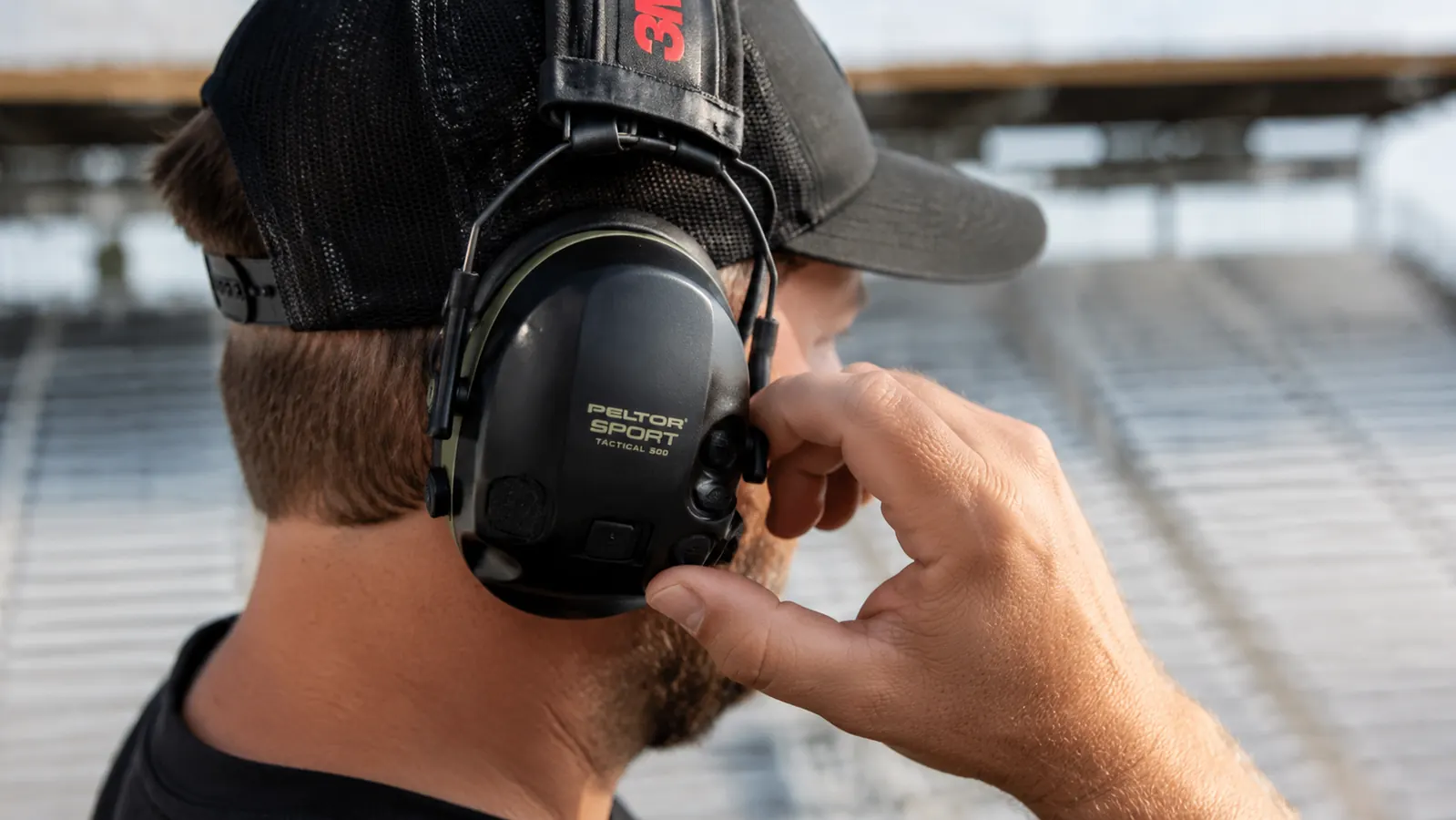
Pairing was simple the first time and every time after, a long press on the power button and then the usual phone Bluetooth menu. Once paired, I could take a phone call without lifting a muff off my ear, and I could run a race scanner app so I heard the driver radio chatter mixed with the ambient track sound Peltor lets through at a lower volume. That mix is the actual selling point over a plain passive muff, since a passive pair either blocks everything or blocks nothing depending on how you wear it, and this one lets you dial in a middle ground.
Phone call audio through the muffs is clear enough for a short conversation but not something I'd want for a long one, since the built-in mic picks up wind and crowd noise more than a phone held to your face would. Music and scanner audio sound better than the phone-call mic does, with enough range to actually enjoy between cautions rather than treat as background noise. I never tried streaming a full race broadcast through them since I was already at the track, but for scanner audio and calls it does exactly what I need it to.
Comfort Over a Full Race Day
The headband clamps with real pressure out of the box, which felt tight for the first race and settled in noticeably by the third. I wear a ball cap most race days, and the fit works fine with a cap if you push the brim back slightly to clear the band, though a stiffer-brim cap fought the seal a little more than a soft one did. Sunglasses were a bigger issue than the cap. Thicker temple arms broke the seal along my cheekbone enough that I could hear a faint whistle of outside noise on windy laps, and switching to a thinner-framed pair fixed it completely.
Nine hours in the sun is a long time for anything strapped to your head, and the ear cups did get warm and a little sweaty by late afternoon on the hottest of the five race weekends. That's a padding and heat issue more than a Peltor-specific flaw, and it's one every electronic muff I've tried shares to some degree. What I noticed the Tactical 500 does better than a cheaper passive pair is the clamping force staying consistent all day instead of loosening up and letting outside noise creep back in during the last few hours, which is exactly when a race gets loudest anyway.
Battery Life, Across a Season
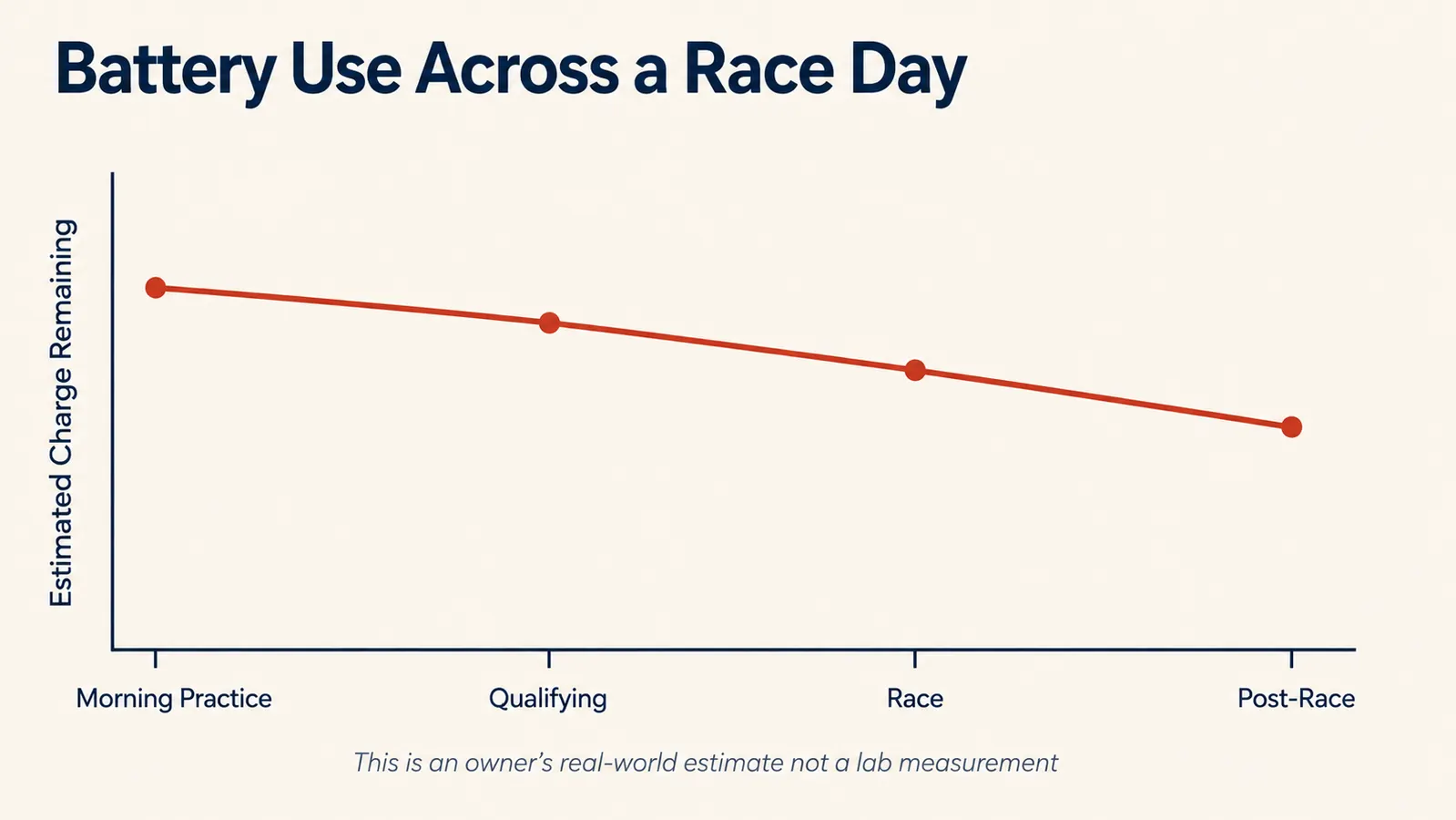
The Tactical 500 runs on two AA batteries rather than a built-in rechargeable pack, and I treated that as a feature once I got used to it. I keep a spare set in the truck console year-round now, the same way I keep spares for a garage door remote. Peltor's own spec sheet claims around ten and a half hours of run time on a fresh set with Bluetooth active, and across the season that number tracked close to what I actually got, maybe a little less on the days I had music or a call running most of the afternoon instead of just ambient pass-through.
The one time I got caught without a spare set was the second Cup race of the season, when the batteries died about two hours into the race after a full day of practice and qualifying the day before on the same pair. The unit also has an automatic shutoff after four hours of no button presses, which saved me from an accidental drain more than once when I forgot to power it off between sessions. Lesson learned after that one dead-battery afternoon: I now swap in a fresh set at the start of any multi-day weekend regardless of what the indicator says.
What the NRR Number Actually Means
NRR is a laboratory rating measured under controlled conditions, and Peltor's spec sheet lists this pair at 25 dB. I'm repeating that number because it's the manufacturer's stated figure, not because I tested it myself or can tell you what it means for your hearing at your seat at your track. What I can describe is the subjective experience: sitting in the same grandstand section at the same Cup race with and without them on, the engine roar goes from something I feel in my chest to something that's clearly still loud but no longer physically uncomfortable by lap fifty. That's a description of what it sounds like to me, not a safety claim.
If you're trying to decide between this pair and something else, the honest comparison point is how it compares to Walker's Razor Slim, which trades some of the Tactical 500's bulk and Bluetooth range for a lower profile and a lighter clamp. I looked at both before buying mine and picked the Peltor for the Bluetooth range and the AA battery convenience over a proprietary charging cable. If you're still convinced you don't need electronic hearing protection at all, I'd point you toward why every race fan needs a pair before you show up to your next Cup weekend with nothing but the free foam plugs they hand out at the gate.
What I Liked
- Bluetooth pairing worked instantly every time across a full season of pairing and re-pairing to different phones
- AA batteries held close to Peltor's claimed run time and are easy to replace with a spare from any gas station
- Clamping force stayed consistent through a nine-hour Cup race day instead of loosening by the final laps
- Ambient pass-through mix lets you hear a scanner app and the track at the same time, not one or the other
- Fit worked fine on my twelve-year-old once the headband was adjusted down
Where It Falls Short
- Thicker sunglasses temple arms break the seal along the cheekbone and let in a faint outside whistle
- Phone call mic quality is fine for a short conversation but picks up wind and crowd noise on longer calls
- Ear cups get warm and sweaty by late afternoon on hot race days, same as most electronic muffs
- No built-in rechargeable battery, so you have to remember to carry spare AAs on multi-day weekends
By lap fifty the engine roar had gone from something I felt in my chest to something that was clearly still loud but no longer uncomfortable.

Who This Is For
This pair makes sense for anyone who goes to more than one or two races a season and wants to hear something other than pure engine noise the whole time, whether that's a scanner app, a phone call between cautions, or just a conversation with the person next to you without lifting a muff off your ear. It's also worth it for a parent bringing an older kid to their first Cup race, since Cole being able to hear me without pulling anything off made the day easier for both of us. If you already own a passive pair and mostly go to one race a year, the Bluetooth features are probably more than you need. If you're a regular at your local short track the way we are, the electronics earn their keep fast.
Who Should Skip It
If you wear glasses with thick temple arms and aren't willing to switch to a thinner pair for race day, the seal issue I ran into is going to bother you more than it bothered me, and no amount of clamping force fixes a gap along the cheekbone. I'd also skip it if you're buying for a younger kid who's still years away from an adult-sized head, since the headband doesn't adjust small enough to seal properly on a smaller skull, and a dedicated kids' passive set will do more for that age group anyway. And if all you want is basic protection for one race a year with no interest in Bluetooth at all, a simple passive muff at a lower price will do the same core job without paying for features you won't touch.
A full season in, this is the pair I grab before every race weekend without thinking twice.
If you're ready to hear more than just engine noise at your next race, the Peltor Sport Tactical 500 is worth checking at today's price on Amazon.
Amazon Check Today's Price on Amazon →