
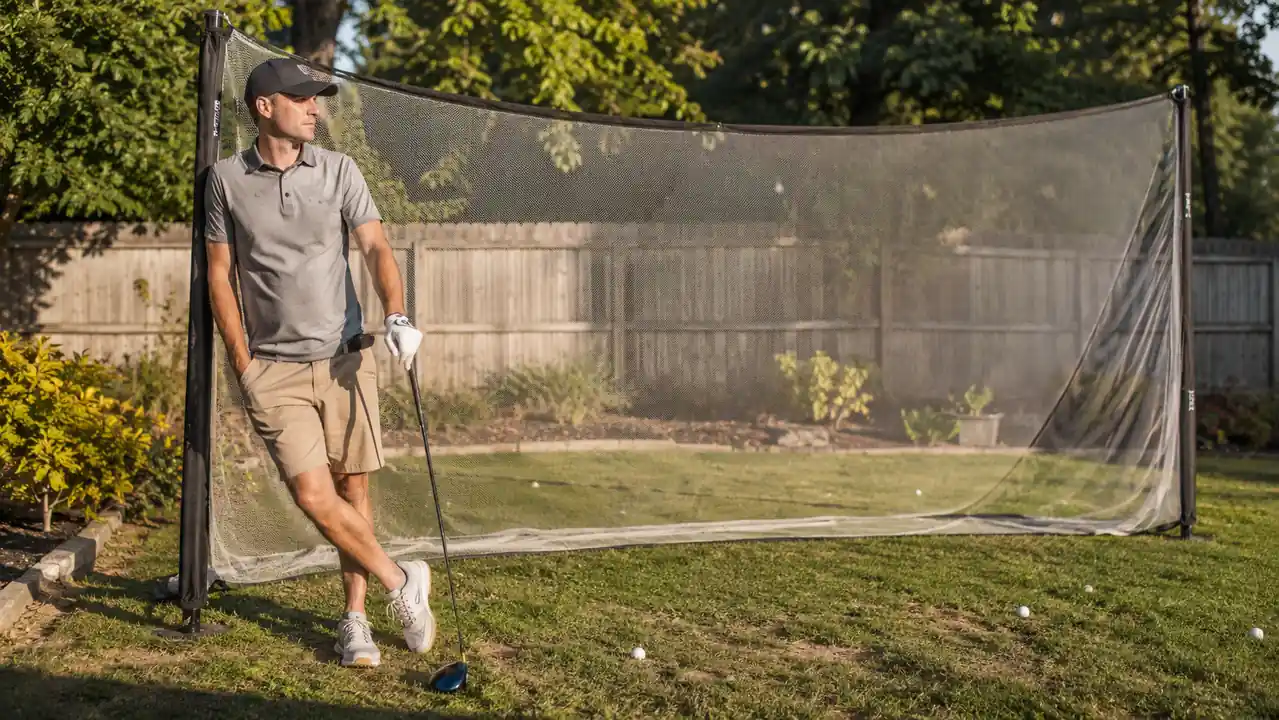
Every review of the GoSports golf net I read before buying mine said basically the same three things: cheap, easy to set up, works fine. None of them mentioned what happens to the netting after eight weeks of actual sun, or what the stakes do in soil that hasn't seen rain in ten days, or how the frame behaves the first time a real gust comes through an open backyard instead of a sheltered garage. I bought the 7x7 version in June, set it up in my backyard instead of a garage, and used it through an entire summer of evening range sessions before I let myself write anything down. I'm a 14 handicap who plays once or twice a week, and the low price felt like a reasonable bet either way. This is the review I wish I'd found before I ordered.
I'm not here to talk you out of the GoSports net. I still own mine and I still use it. But the honest version of this review is the one that tells you where it actually struggles, not just where it holds up, because those are two different articles and most of what's out there is only the second one.
The Quick Verdict
A capable budget net indoors or in a sheltered spot, but outdoor, exposed-yard use exposes real weak points the five-star reviews don't mention.
Amazon Check Today's Price →Know what you're actually getting before you set it up outside
The GoSports net is still one of the easiest ways to keep swinging on a budget. Just go in knowing where the corners get cut. Check today's price on Amazon and decide for yourself.
Amazon Check Today's Price on Amazon →How I Actually Used It
I don't have a garage bay to spare, so from the start this net lived outside, staked into a strip of lawn along our back fence between a raised garden bed and the kids' old swing set frame we never got around to tearing down. That meant setting it up and breaking it down most sessions rather than leaving it assembled in a corner, because leaving a full-size net standing in an open yard overnight in a neighborhood with actual weather felt like asking for trouble. I hit into it three or four evenings a week from June through early September, mostly 7-iron and wedge work with the occasional cautious driver swing when I was feeling brave and the wind was calm.
The setup and breakdown cycle is where a lot of the wear happened, and it's the piece I almost never see mentioned in other reviews. A net that stays assembled in a garage corner all winter, like the one I reviewed for our long-term piece, experiences a completely different kind of stress than one that gets folded, staked, unstaked, and folded again forty or fifty times over a summer. Every fold is a chance for a pole joint to loosen slightly. Every stake pulled out of dry ground and driven back in somewhere else is a chance for that stake to bend a little more than it did the time before.
I got in the habit of breaking the whole thing down and stashing it in the shed most nights, partly for the neighborhood weather and partly because leaving it standing invited wasps to start building along the folded netting sleeve within a week. My nephew Deacon stayed with us for a stretch in July, and between his catcher's reflexes and my son's, they turned a few sessions into an impromptu fielding drill on balls that bounced back off the frame, which the net handled fine but which also meant it got dragged in and out of the shed more often than I'd planned on when I bought it.
By August I had a rhythm down. Stakes went in at a slight outward angle instead of straight down, which held better once I figured it out, and I stopped trying to fully collapse the poles every single night, settling instead for leaning the folded frame against the fence under a tarp when I knew I'd be back out the next evening. Neither of those adjustments is in the instructions. You learn them by using the thing outdoors for real, which is exactly the kind of detail a two-week rental-unit review never gets to.
The Ground Stakes Are the Weakest Link
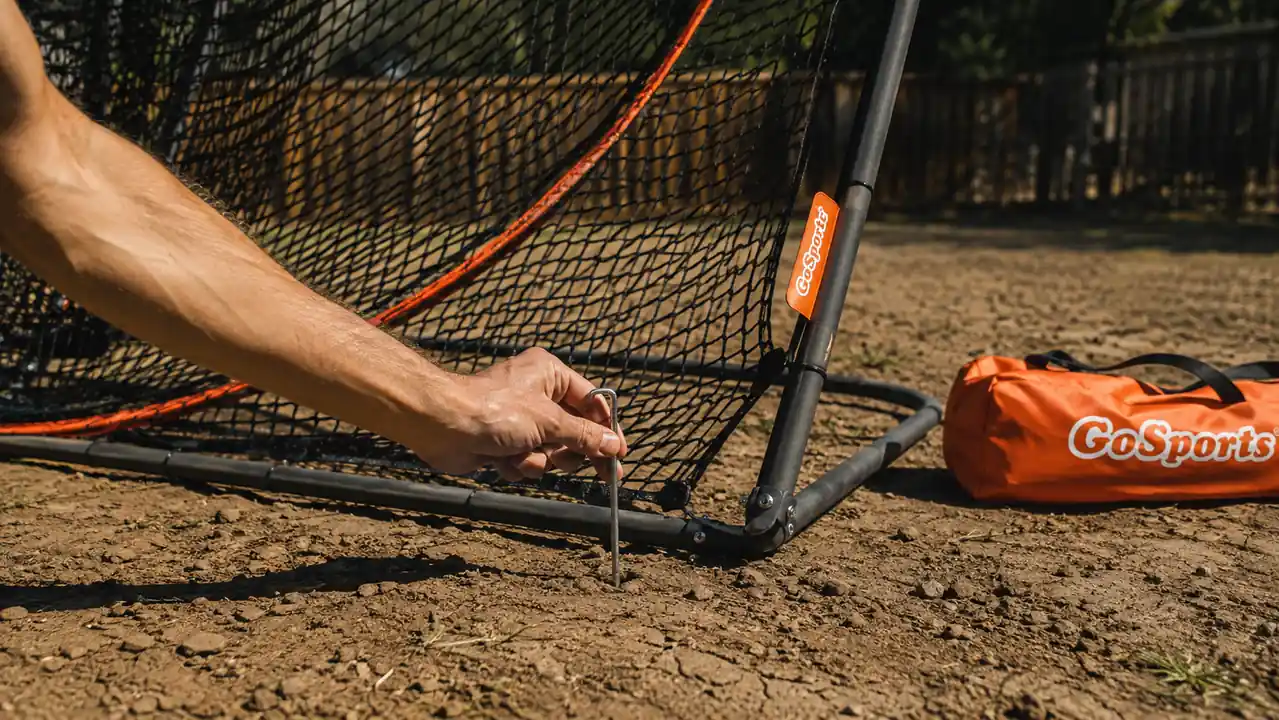
This is the single biggest gap between the marketing and the reality. The stakes that ship with the net are thin, and in anything short of soft, well-watered lawn they struggle. My backyard turns to something close to hardpan by mid-July if I skip a week of watering, and pushing a stake into that ground by hand simply doesn't work. I ended up tapping them in with a rubber mallet, and by the third week of doing that, two of the four stakes had a visible bend near the top where the metal had started to give.
A bent stake still functions, mostly, but it grips the ground less firmly with every use, and a loosely staked net is a net that can shift position mid-session or, on a bad day, tip. I eventually replaced the stock stakes with a set of heavier landscape stakes I already had in the garage from an old privacy screen, and the difference was immediate. That's a cheap fix, but it's a fix the box doesn't warn you you'll need, and I think that's worth saying plainly instead of glossing over it the way most reviews do.
Wind Is a Real Problem in an Open Yard
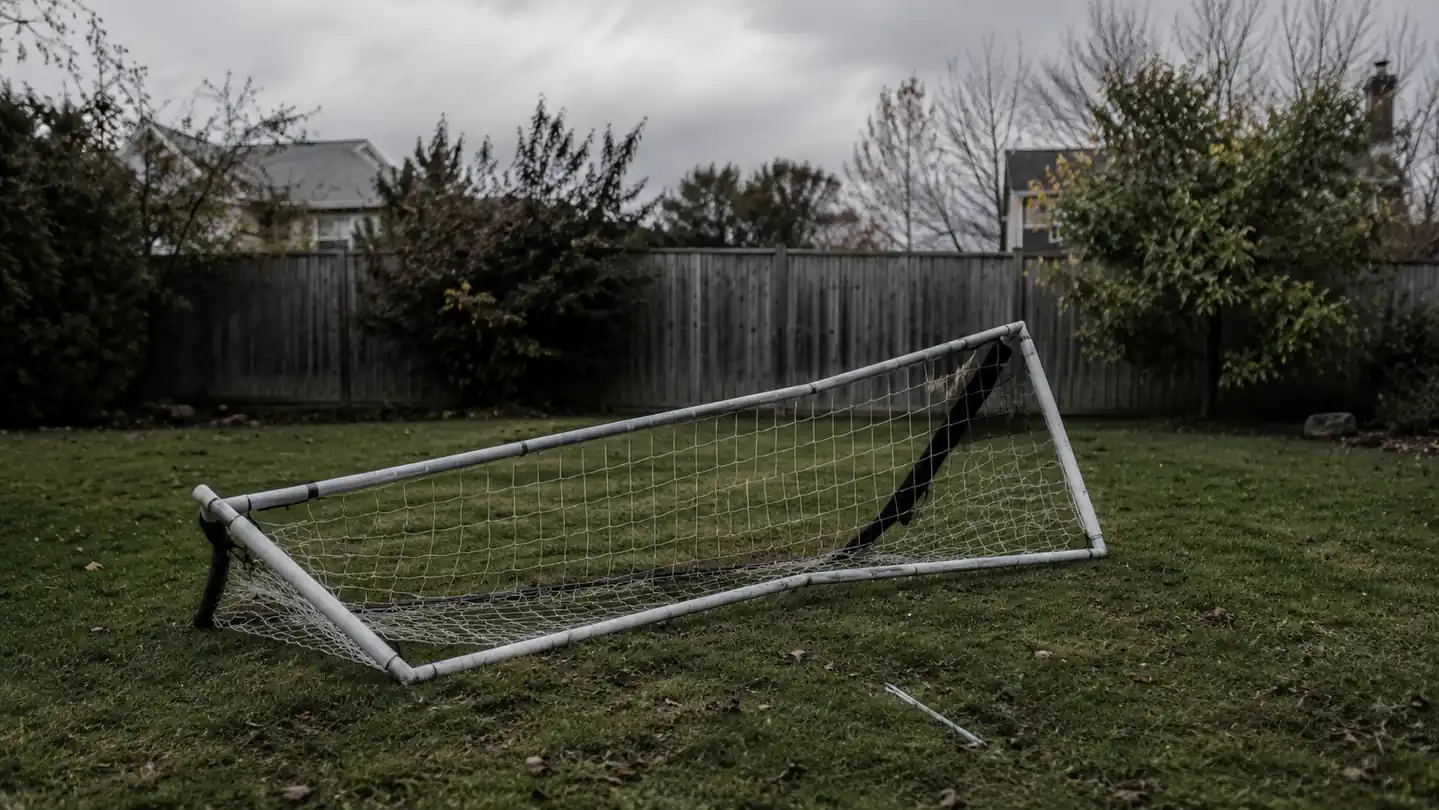
A garage has walls. A backyard doesn't, and that changes everything about how this net behaves. On a calm evening it sits there and does its job. On a gusty one, especially with a storm front rolling through in late July the way they do around here, the whole frame catches wind like a small sail even when nobody's hitting into it. I came out one evening to find it tipped completely over on its side, one stake pulled clean out of the ground and the frame lying flat in the grass a few feet from where I'd left it standing.
Nothing broke. The poles are flexible enough that a fall like that doesn't snap anything, and I had it back upright and restaked in under two minutes. But I don't think a net this light was ever really engineered with an unsheltered, gusty backyard in mind, and I'd rather tell you that up front than let you find out the way I did. If your setup spot has any real wind exposure, plan on checking it before every session and probably weighing the base with something heavier than the stock stakes alone.
The scarier version of that same gust happened on an evening my daughter Piper was tossing a whiffle ball around near the fence while I finished a set of wedges. A gust caught the net just as she'd wandered within a few feet of it, and it swayed hard enough that I called her back before it actually went over. It didn't, that time, but it's the kind of thing that made me start treating an unweighted net in an open yard as something to keep an eye on rather than something you set up once and stop thinking about.
Sun Fade Is Real, and It's Faster Than I Expected
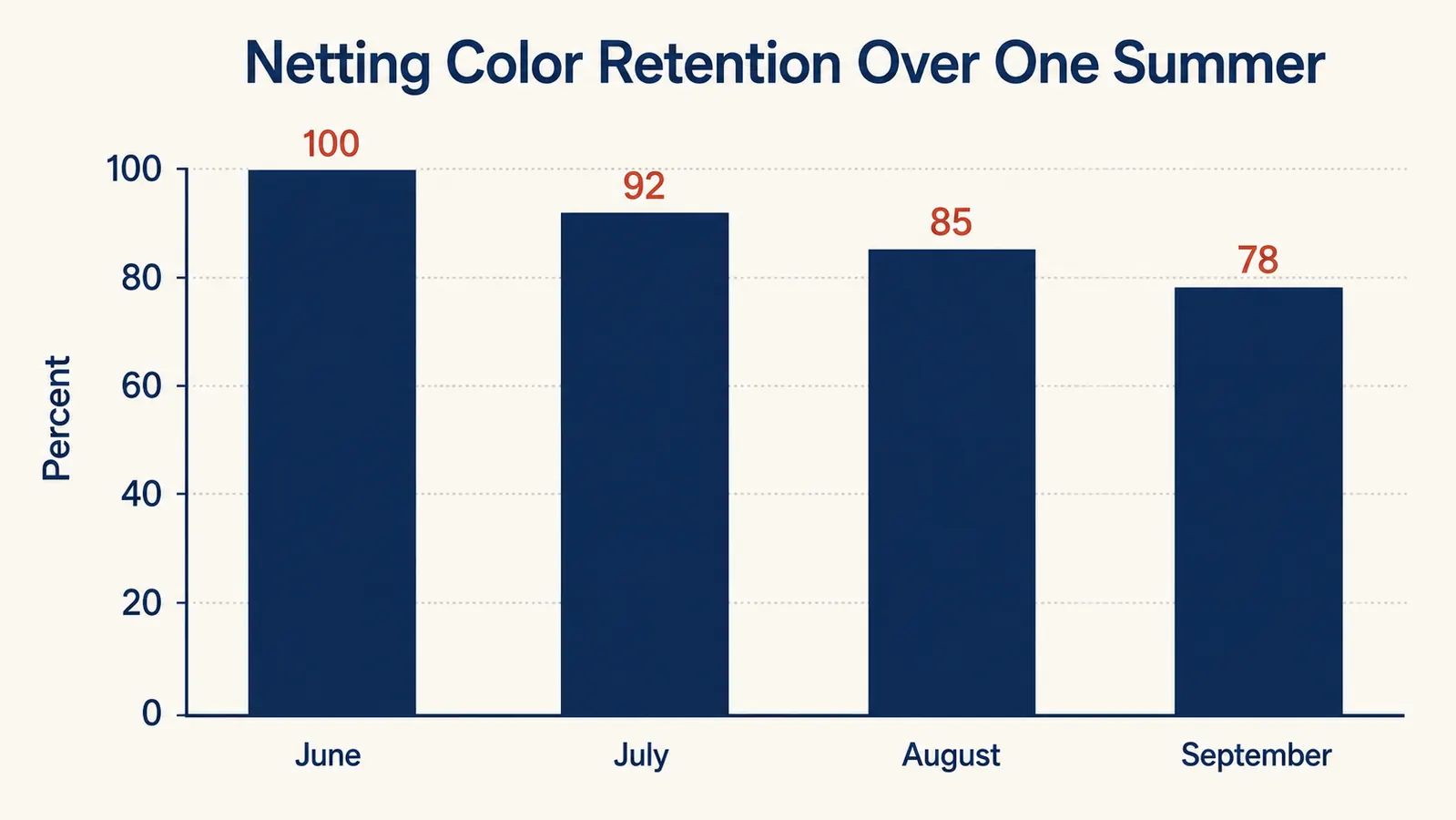
The net I reviewed for the winter garage piece never saw direct sunlight, so this is genuinely new information rather than a repeat of anything I've already told you. My backyard net gets four or five hours of direct afternoon sun most days, and by the end of the summer the netting had visibly lightened from a deep charcoal to something closer to a faded gray, especially on the side that faces west. It's cosmetic, not structural, at least so far. I haven't seen any actual weakening or fraying that I can trace directly to sun exposure rather than impact.
But cosmetic still matters if you care how your setup looks in photos or if you're the kind of person who notices these things every time you walk outside. Nobody selling this net mentions UV fade because nobody testing it for a quick review leaves it out in real sun for three straight months. I did, by accident, because that's just where my yard put it, and I think that detail belongs in an honest review even though it wouldn't stop me from buying it again.
The Carry Bag Wears Faster Than the Net Itself
Nobody talks about the bag, and after a summer of near-daily use, mine is the part that shows the most wear. The single strap started fraying at the stitching by early August, right where it takes the full weight of four poles and a folded net every time I sling it from the shed to the yard and back. It's not torn through, but I've started carrying it two-handed instead of over the shoulder as a precaution, because I don't trust that seam to hold much longer under the same load.
That kind of wear simply doesn't show up if you're only assembling a net once and leaving it standing for a season, which is how most reviews, including my own long-term garage piece, actually used one. Daily transport is a different test entirely, and it's the one that exposed the bag as the flimsiest component in the whole package. If your plan involves moving the net in and out of storage as often as I did, budget for the strap to be the first thing that gives out, not the poles or the netting.
What the Frame Actually Can and Can't Handle
To be fair to GoSports, the parts of the product that are supposed to be under load held up fine. The fiberglass poles never cracked despite being folded and unfolded far more often than the garage version I own would ever need to be. The netting itself never tore, even with a stray full driver swing or two that I probably shouldn't have attempted given how close the fence was. The stitching along the seams looks the same in September as it did in June.
What struggled were the exact parts you'd expect to struggle on a budget net asked to live outdoors: the ground stakes, the carry bag under daily transport, the frame's resistance to wind when unweighted, and the netting's color under sustained UV. None of that is really a manufacturing defect. It's the honest ceiling of what this price point and this design were built to handle, and I think that distinction matters more than most five-star reviews let on.
What I Liked
- Frame and netting never tore or cracked despite repeated setup and breakdown all summer
- Cheap enough that outdoor wear and tear doesn't sting the way it would on a pricier net
- Folds down small enough to lean against a fence or store in a shed between sessions
- Stitching and seams on the net itself showed zero wear after a full season of use
- Easy to swap the weak stock stakes for sturdier ones without any tools
Where It Falls Short
- Stock ground stakes bend fast in dry, hard soil and need replacing
- Frame can tip over in real wind if the yard has no shelter and the stakes aren't solid
- Netting visibly fades from sun exposure within one summer of direct light
- Carry bag strap frays quickly under near-daily setup and breakdown
- Not designed with unsheltered outdoor use as the primary scenario, despite being marketed for both
Nobody testing this net for a quick review leaves it in real sun and real wind for three straight months. I did, by accident, and that's the review that was missing.
Who This Is Actually For
This net makes the most sense for someone who has a sheltered spot to use it, a garage, a covered patio, a fenced yard without much wind exposure, and who's willing to swap the stakes for something sturdier if the ground is at all dry or compact. If you're realistic about the price point and you treat the stock hardware as a starting point rather than a finished product, you'll get a genuinely useful off-season or evening practice tool without feeling like you overpaid. I still use mine, and I still think it earns its place in the yard, but I got there by adjusting my expectations, my stakes, and how I carry the thing, not by assuming it would work perfectly out of the box in an open, windy yard.
Who Should Skip It
If your only setup option is a wide-open, exposed backyard that gets real wind and hard, dry soil for months at a time, you're going to spend more time fighting stakes and chasing a tipped frame than actually swinging a club, and that's a frustrating way to spend your money. You'd be better served either picking a more sheltered corner of the property, investing a little in heavier stakes from the start, or stepping up to a heavier net with a weighted base designed for genuine outdoor exposure. Anyone expecting a set-it-and-forget-it outdoor net that shrugs off wind and sun without any adjustments on your part is going to be disappointed, and I'd rather tell you that now than have you find out the way I did.
Go in with your eyes open and this net earns its price
It's not perfect in an open backyard, but with sturdier stakes and a little wind awareness, it's still one of the cheapest ways to keep your swing alive between rounds. See today's price on Amazon before deciding.
Amazon Check Today's Price on Amazon →