
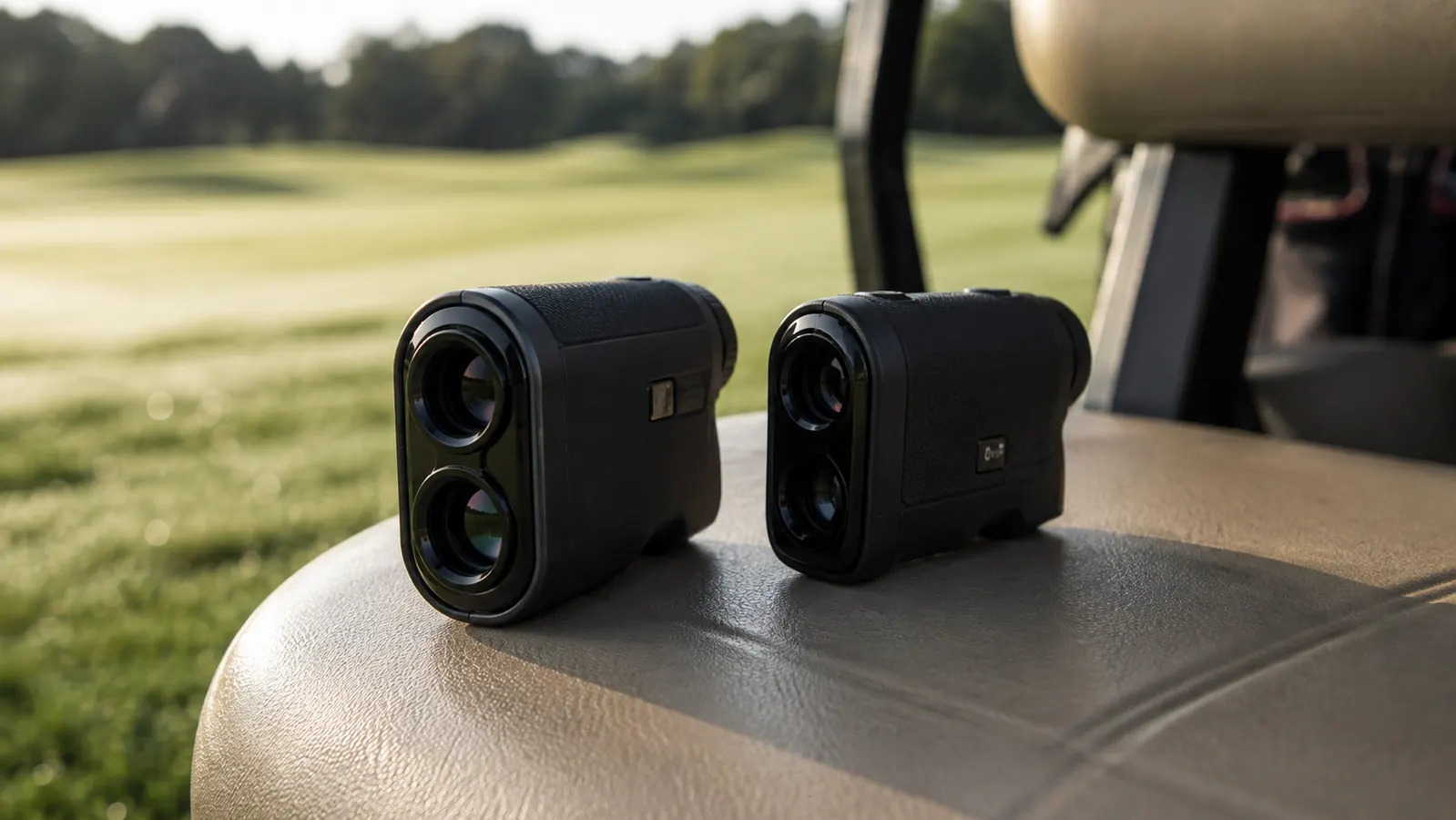
Short answer up front, because I know most people searching this are standing in an aisle or a browser tab trying to decide fast: if you're a weekend player who wants accurate yardages without overthinking it, the Callaway 300 Pro does the job for a price that doesn't sting. If you play enough rounds that you're chasing every half stroke, or you want tournament-legal slope toggling with a locking cover so you never get DQ'd by accident, the Bushnell Tour V6 Shift is worth the extra money. I've carried both this season, one in my own bag and one borrowed from a buddy at my Thursday league, and neither one is a bad purchase. They're just built for different golfers.
I bought the Callaway 300 Pro two years ago after guessing my way through one too many par 5s and coming up short on the approach. My brother-in-law Rick plays a stricter club schedule than I do and picked up the Bushnell Tour V6 Shift last winter because his club runs occasional slope-restricted events and he didn't want to own two devices. That difference in how we each use a rangefinder is basically the whole comparison, so let's get into the actual numbers before I tell you which one I'd hand you if you asked me on the range.
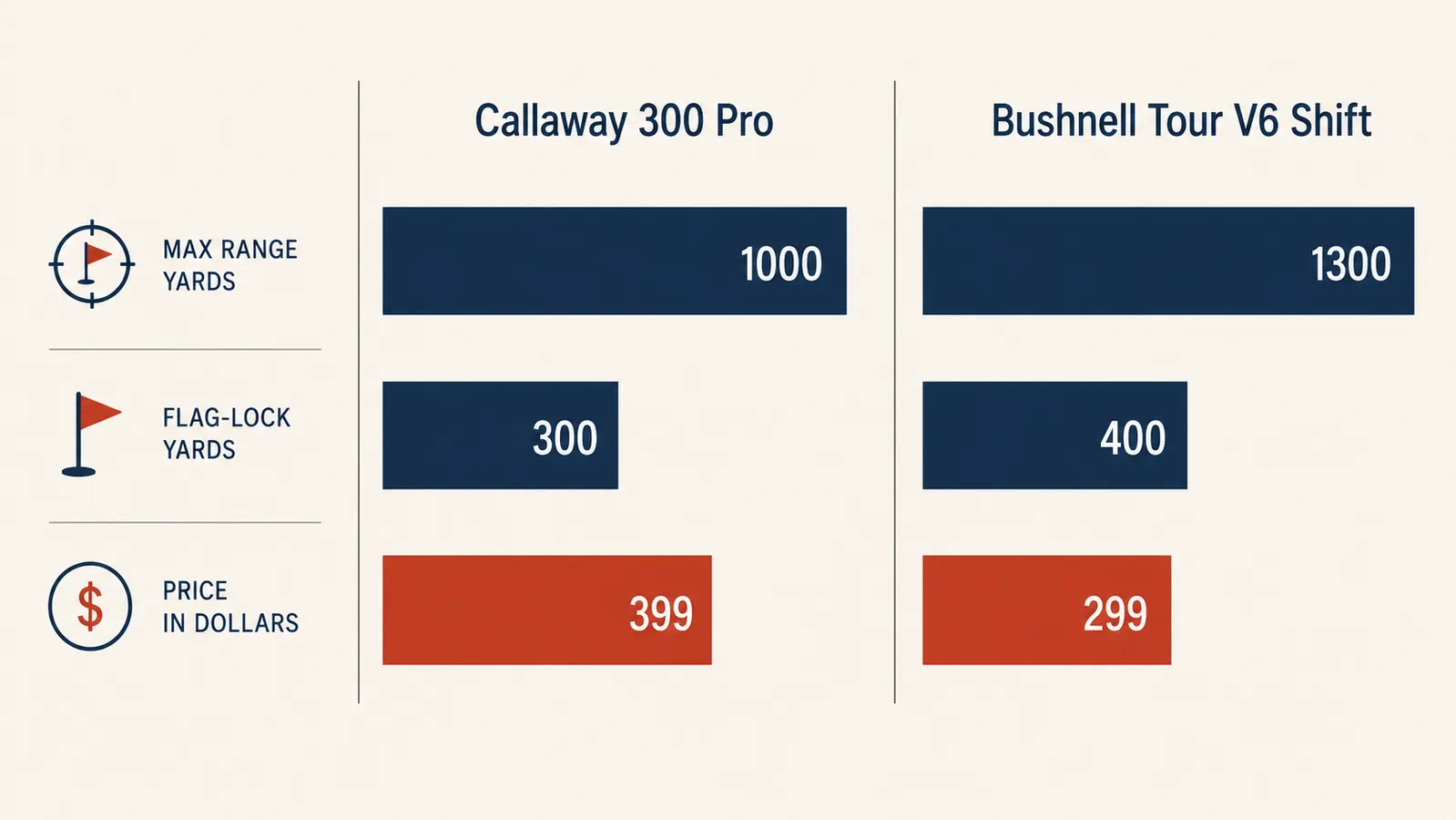
| Callaway 300 Pro | Bushnell Tour V6 Shift | |
|---|---|---|
| Today's price | Around $170 | Around $400 to $450 |
| Maximum laser range | Up to 1,000 yards on reflective targets | Up to 1,300 yards on reflective targets |
| Reliable flag-lock distance | Roughly 350 yards with Pulse Vibration confirmation | Roughly 450 yards with Visual JOLT confirmation |
| Slope switch | External toggle switch, tool-free, no cover | External toggle switch with a locking cover to prevent accidental tournament use |
| Weatherproofing | Water-resistant, not rated for full submersion | IPX7 rated, can handle a dunk in a ball washer or puddle |
| Carry and mount | Zippered belt pouch only | Belt pouch plus a magnetic BITE mount that clips to a cart bar or bag strap |
| Warranty | 2-year limited warranty | 2-year standard, extendable to 5 years with product registration |
| Size and weight in the bag | Compact and light, easy to keep in a pocket | Noticeably bulkier, sits better in a cart pouch than a pocket |
| Value for a casual weekend player | Everything most rec golfers need, at roughly a third of the cost | Overbuilt for someone who plays a dozen rounds a season |
How I've Actually Used Both
I play about thirty rounds a year, mostly at two public courses near me with my regular Thursday foursome, plus a handful of scrambles for my son Eli's travel team fundraiser. That's not a lot of golf compared to a serious amateur, but it's enough that I know my miss and I know which club I actually hit 155 yards versus which one I wish I hit 155 yards. The Callaway 300 Pro has lived in my bag's side pocket for two full seasons now, and it's been out in rain, dropped on a cart path twice, and left in a hot car more times than I'd admit to my wife. It still locks the flag in under a second on par 3s and hasn't needed anything but a fresh CR2 battery once a year.
The Bushnell Tour V6 Shift I've only used on loan, four or five rounds total, including one member-guest event where slope had to be switched off for the entire back nine. That's actually where the Bushnell earned its keep for me: flipping the toggle and seeing the locking cover snap over it meant I never had a moment of doubt about whether I'd left slope on by accident, which has happened to me exactly once with a cheaper unit years ago and cost me an embarrassing conversation with a rules official. If your club runs events like that even occasionally, that one feature alone is worth thinking about.
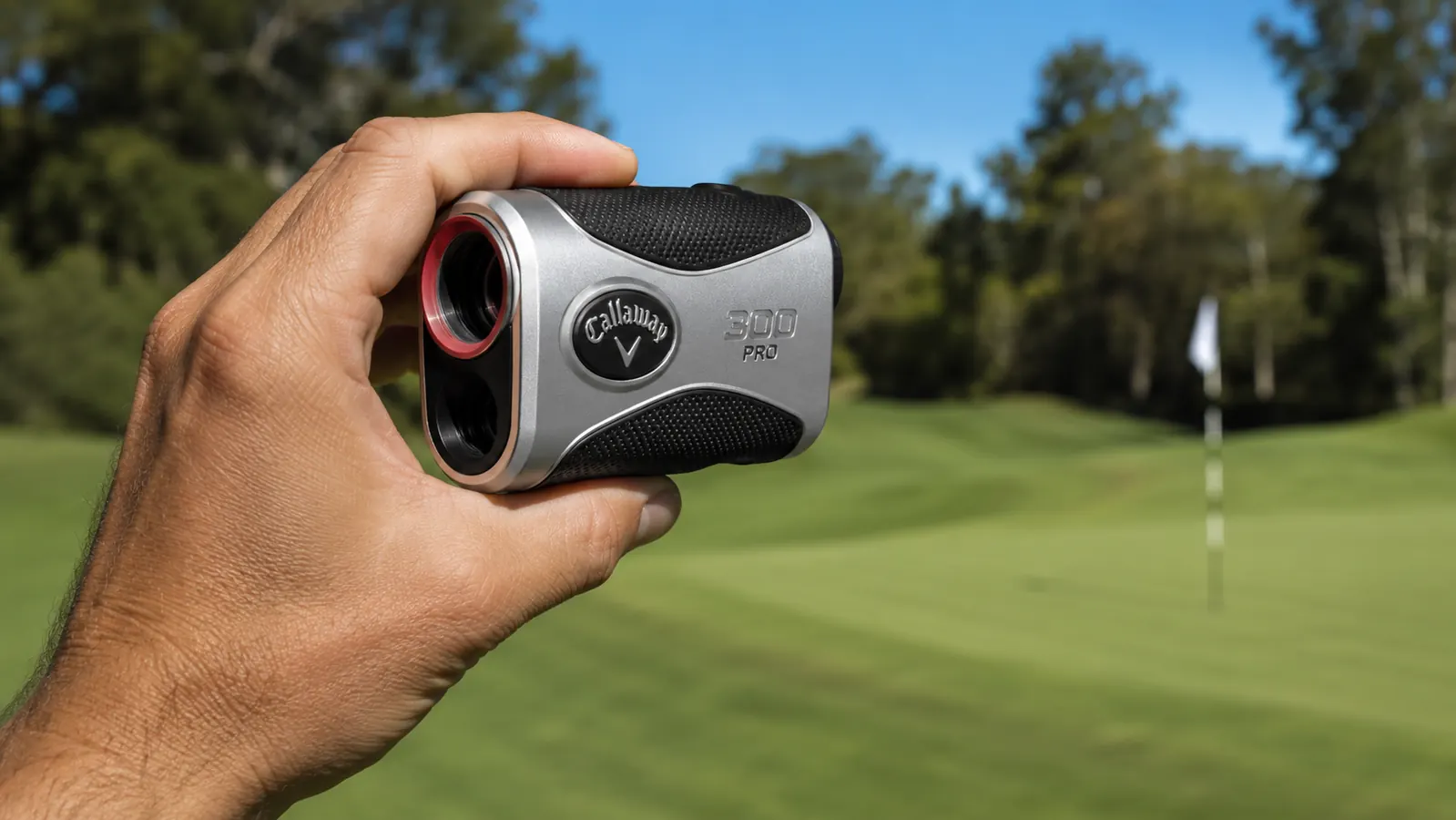
Where the Callaway 300 Pro Wins
Price is the obvious one, but it's not just that the Callaway 300 Pro costs less. It's that the gap between the two units in real-world usefulness is a lot smaller than the price gap suggests. For the vast majority of shots I hit, the flag is somewhere between 80 and 180 yards away, and both rangefinders lock onto a pin in that window instantly and accurately. I'm not standing on a tee needing to know the exact yardage to something 1,200 yards off in the distance. That extra range on the Bushnell is real, but it's solving a problem most weekend golfers don't have.
The Callaway 300 Pro also just disappears into your round better because of its size. It slides into a pants pocket, not just a bag pouch, which matters more than people expect the first time they're walking instead of riding a cart. My Thursday group walks nine holes half the time, and I genuinely forget the Callaway is in my pocket until I need it. The Bushnell's bulk isn't a dealbreaker, but if you walk a lot of golf, it's a real difference you'll feel by the back nine.
Where the Bushnell Tour V6 Shift Wins
The locking slope cover is the feature I keep coming back to. Any golfer who plays in even occasional tournament or slope-restricted settings should take that seriously, because the penalty for having slope engaged during a scored round isn't a warning, it's disqualification in a lot of formats. The Callaway's exposed toggle is fine for casual play where nobody's checking, but it's genuinely easy to bump in a bag pocket without noticing, and I'd rather not find out the hard way like my friend's dad almost did before he switched.
The magnetic BITE mount is the other one that surprised me. Clipping the Bushnell straight onto the cart steering bar meant it was always in the same spot, always charged in my hand before I even got to the ball, and never rattling around loose in a cup holder next to a water bottle. If you ride carts more than you walk, that convenience adds up over eighteen holes in a way that's hard to put a number on but easy to feel.
What the Price Gap Actually Buys You
It's easy to look at a $170 rangefinder next to a $420 rangefinder and assume the expensive one is simply better across the board, but that's not really how it plays out on the course. The optics on both units are clear enough that I've never squinted trying to find a flag against a treeline on either one. Where the money actually goes is in the extras: the locking slope cover, the magnetic mount, the higher IP water rating, the longer maximum range. None of those change whether you can tell the difference between a 142-yard shot and a 156-yard shot on a normal Tuesday round, which is the thing that actually affects your score.
I asked Deacon's dad point blank if he felt like the Bushnell made him a better golfer, and he laughed and said no, it just made him more confident he wasn't going to get flagged at a member-guest for having slope on by accident. That's an honest answer, and it lines up with what I've seen using both. The Callaway gets you the number. The Bushnell gets you the number plus a handful of conveniences that matter a lot to a specific kind of golfer and not very much to everyone else.
Tired of guessing 150 versus 165 and picking the wrong club anyway?
The Callaway 300 Pro locks a flag in under a second and fits in a pocket, not just a bag pouch. It's the rangefinder I've actually carried for two full seasons.
Amazon Check Today's Price on Amazon →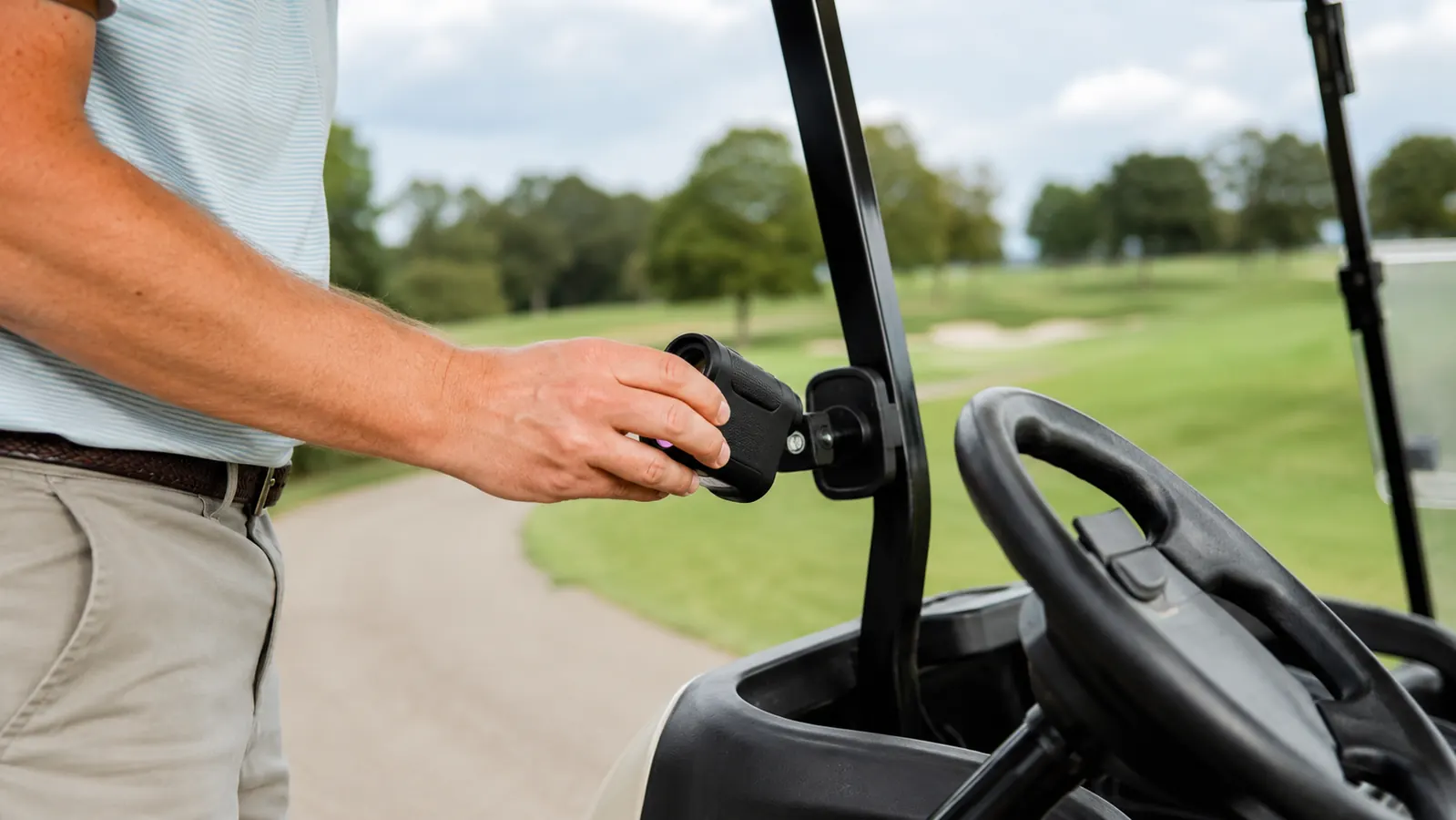
Battery Life and Everyday Reliability
Both units run on a CR2 battery, and in two seasons with the Callaway I've replaced mine exactly twice, both times because I forgot it was getting low rather than because it died mid-round. The Bushnell I only had for a handful of rounds so I can't speak to its long-term battery life firsthand, but the spec sheet claims similar longevity and nothing about the extra features, the mount, the locking cover, seems to draw meaningfully more power. Neither one has ever left me standing on a tee box with a dead rangefinder, which is really all I ask of a piece of gear I'm trusting to pick my club.
The other thing worth mentioning is how each one handles a mis-read. Every laser rangefinder occasionally locks onto a tree branch or a cart instead of the flag, especially in tight, tree-lined holes. The Callaway's Pulse Vibration confirms a lock with a quick buzz, so you learn fast whether you actually got the pin or something in front of it. The Bushnell's Visual JOLT does the same thing through the display rather than a vibration, and honestly I found it just as easy to trust once I got used to looking for it. Neither one fooled me into a bad number more than once or twice all season, and both times it was obvious enough from the flash that I re-aimed and got a clean read.
Who Should Buy Which
If you're the golfer who plays a casual round most weekends, keeps score for fun, and wants a device that gets you an honest number so you can quit guessing your 7-iron from your 8-iron, get the Callaway 300 Pro. It does the core job, it's light enough to forget you're carrying it, and the price means you're not sweating a drop on a cart path the way I have twice. For most of the people reading this, that's the right call, and it's the one I'd make again if I lost mine tomorrow. I've recommended it to two guys in my Thursday group already, and both came back saying the same thing: it's boring in the best way, it just works every time you pull it out, and you stop thinking about it after the first week.
If you play in club events with slope restrictions, ride a cart most rounds, or you just want the extra range and the peace of mind of the locking cover, spend the extra money on the Bushnell Tour V6 Shift. It's a better piece of equipment on paper, and in the situations where those extra features matter, they matter a lot. Just don't buy it thinking it will fix your short game, because neither of these gadgets hits the ball for you. They just stop you from lying to yourself about the yardage. Just make sure you're actually the golfer that description fits, and not just someone who liked the idea of owning the nicer version, because the price difference is real money either way.
Ready to stop three-putting from the wrong yardage every round?
See today's price on the Callaway 300 Pro and get the same accurate reads I've relied on for two seasons of weekend rounds.
Amazon Check Today's Price on Amazon →