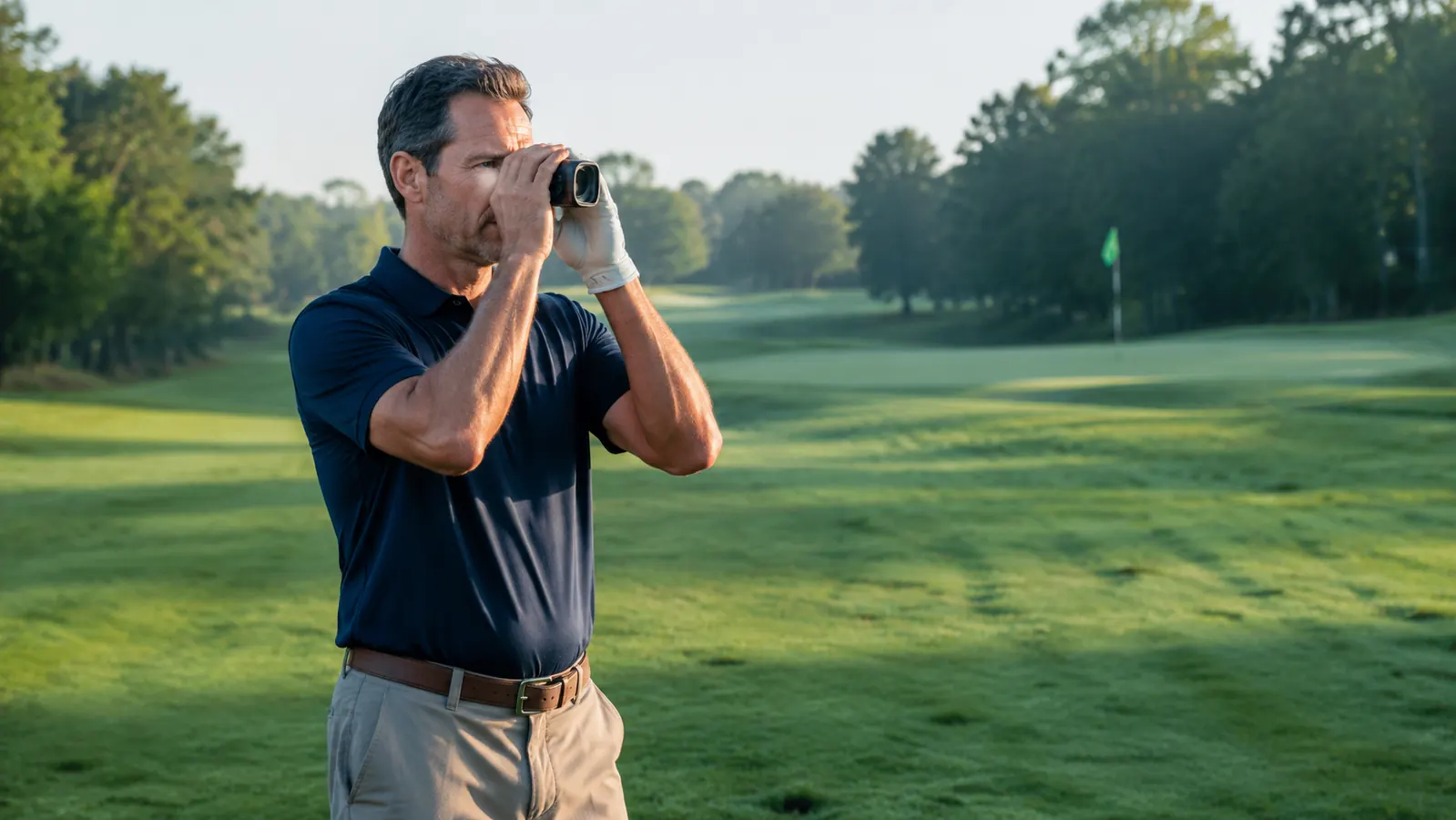
I have three-putted more greens than I want to admit, and not because of my putting. It was because I was still arguing with myself about club selection while standing over the ball. I play a Saturday-morning group with a couple guys from the rec softball league I'm in, the kind of round where nobody's kidding themselves about their handicap. For years my whole yardage system was pacing off sprinkler heads and squinting at whatever number was stamped on the cart path marker, then adding or subtracting ten yards based on a feeling. That changed the week I bought a Callaway 300 Pro rangefinder, and it is the easiest hundred and seventy dollars I've spent on any sport I play, softball included.
The shot that finally pushed me to buy it wasn't even a bad swing. It was a good swing hit at the wrong distance. Par 4, decent drive, and I stood over my approach convinced the sprinkler head marked 150 meant I had 150 to the pin. I hit a smooth 8-iron, watched it land twenty feet short and roll back off the front of the green into the collection area, and found out later the pin was tucked a good fifteen yards deeper than the sprinkler head. My playing partner didn't say much. He just pulled his own rangefinder out of his bag pocket, lasered the flag in about two seconds, and said the number out loud before I'd even picked my ball out of the rough. I'd been watching him do that all season and telling myself I didn't need one. I needed one. The Callaway lives in the cart bag now and comes out on every approach shot I am not sure about.
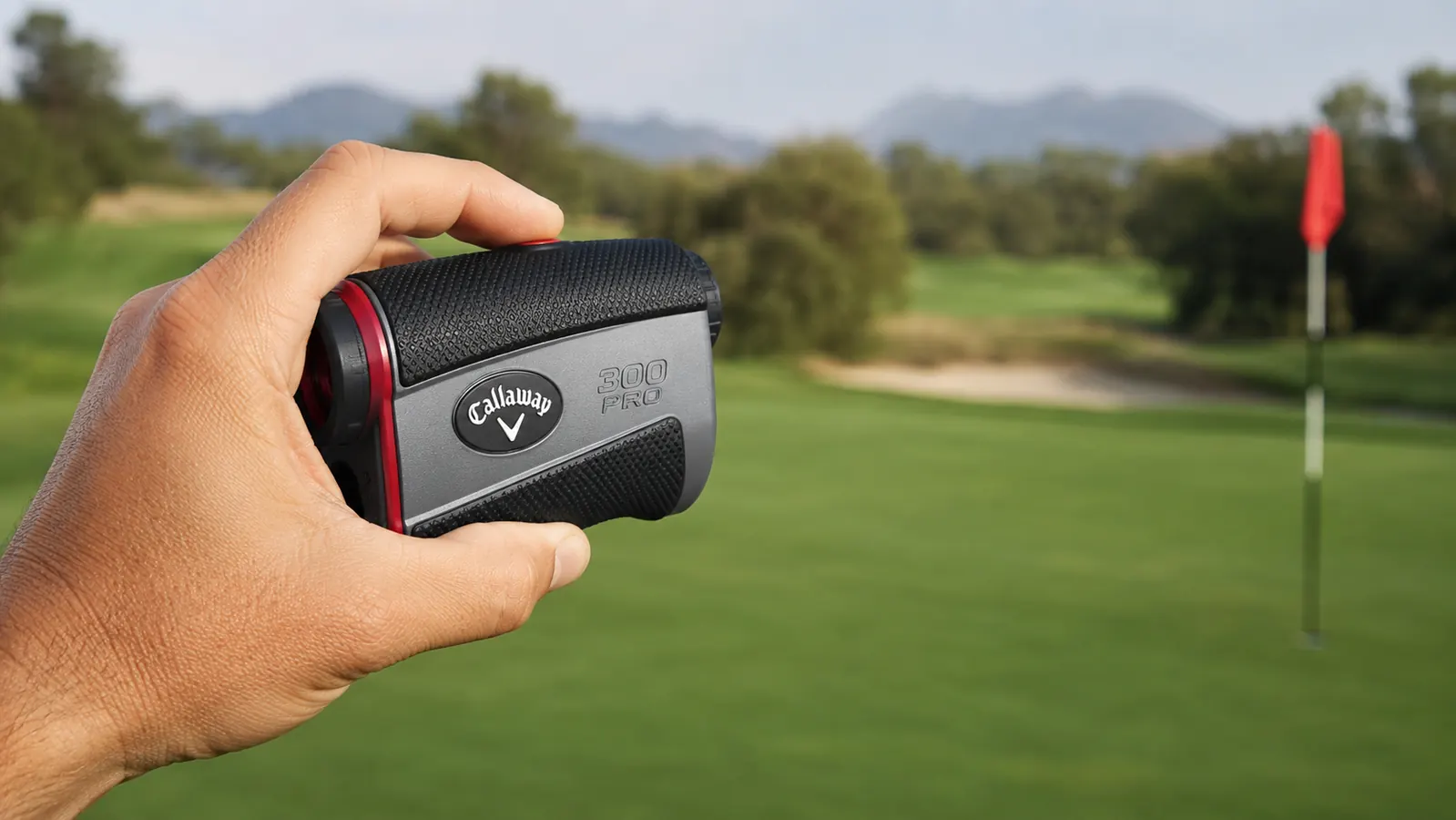
I did the research the way I do everything, which is to say I read a handful of reviews and picked the one that came up on top of every list without much drama attached to it. The Callaway 300 Pro has the external slope switch, which matters more than I expected once I actually used it. Slope on shows you the adjusted, gravity-corrected number for uphill and downhill shots. Slope off gives you the plain flat number, which is the one that's legal to use in a tournament. I keep mine set to slope off for the club-selection basics and flip it to slope on when I'm just playing for fun with the softball guys and want the real picture of a downhill par 3.
It didn't make my swing any better. It just stopped my swing from aiming at the wrong number.
Tired of guessing at yardage and living with it?
I spent years pacing off sprinkler heads and adding ten yards for luck. One round with a borrowed rangefinder ended that for good. Here's the one I bought.
Amazon Check Today's Price on Amazon →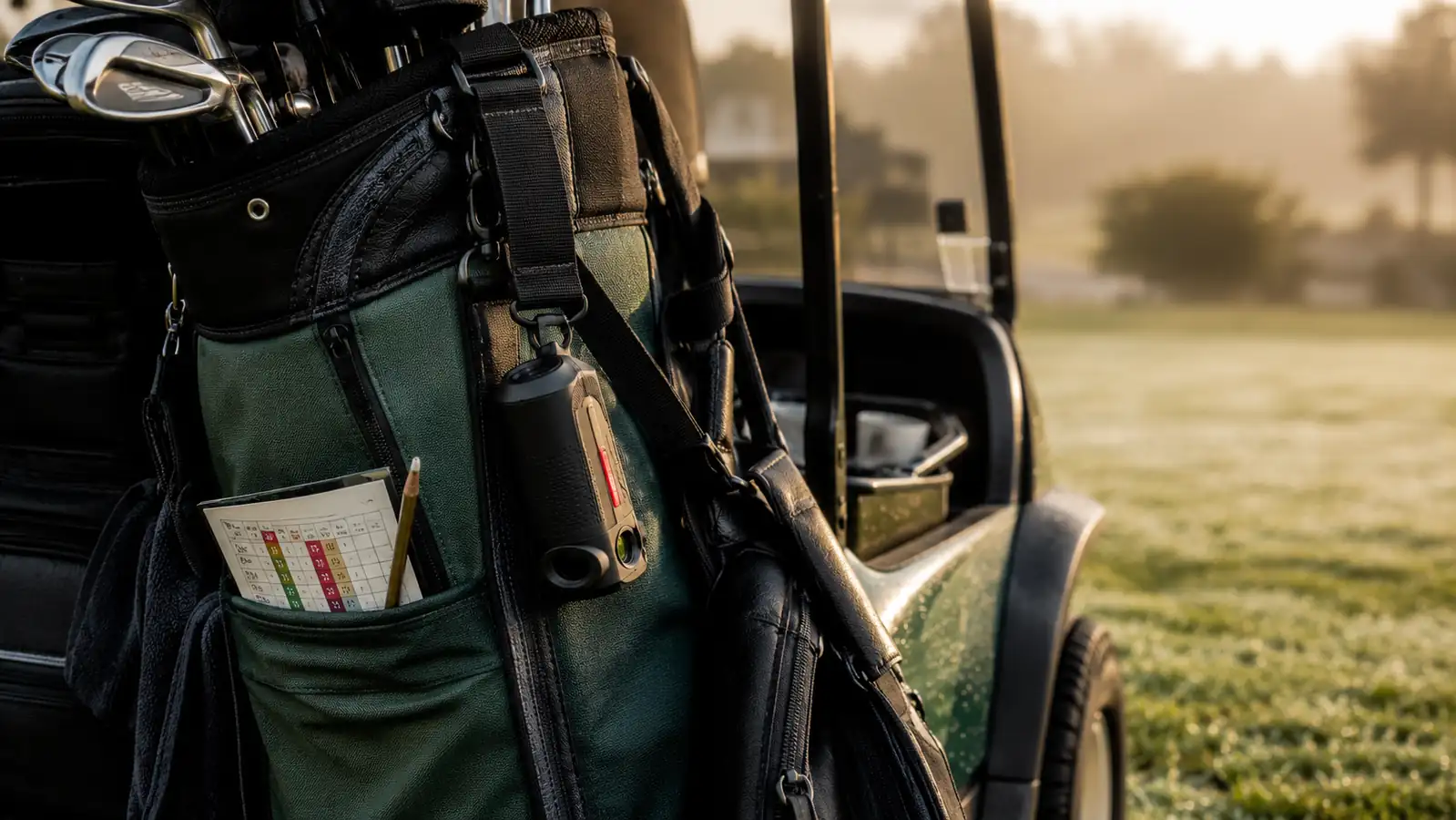
The first thing I noticed using it on my own course wasn't the accuracy, it was the speed. Pin Seeker locks onto the flag inside about half a second and gives you a short vibration in your hand to confirm it grabbed the flag and not the bunker or the tree line behind it. That vibration matters more than it sounds like it should. Without it, I used to second-guess whether I'd actually lasered the pin or something forty yards past it, and I'd shoot the same target two or three times just to be sure. Now I laser it once, feel the buzz, and I'm already pulling a club.
It also changed the pace of our group, which I didn't expect to care about but do. Four guys who all used to pace off distances or eyeball it now each laser their own shot in under five seconds and we're walking to our balls instead of standing around doing yardage math out loud. On a course that runs slow on a Saturday morning, that adds up to real minutes, and nobody in my group is going to complain about finishing a round faster.
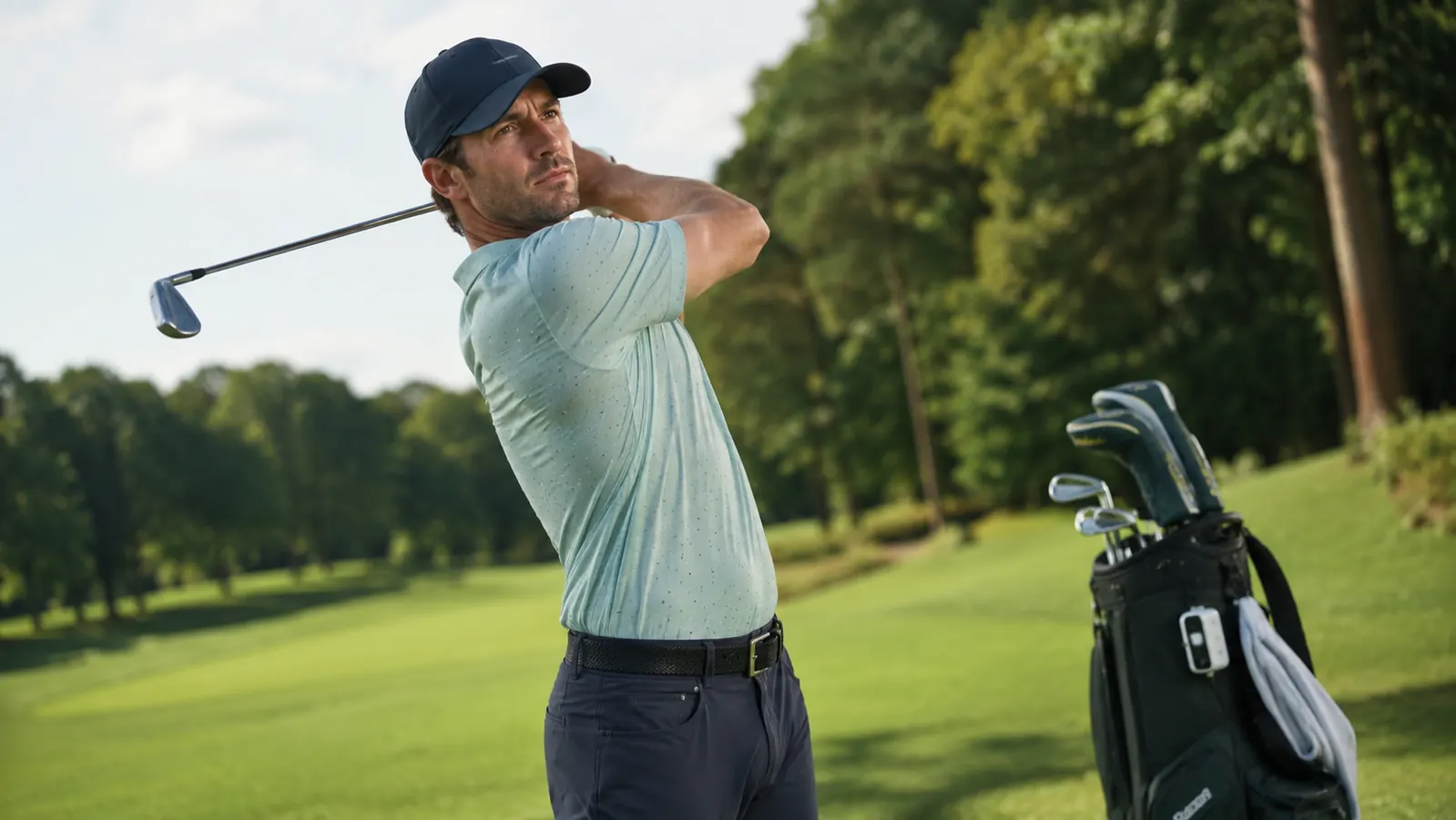
I've also started using it for something I didn't plan on, which is scouting a hole before I even hit. Standing on the tee of a blind dogleg, I can laser a tree or a bunker edge I can see and back into roughly where the fairway turns, instead of guessing at a number I can't verify until I've already hit driver. It's turned a couple of holes I used to play defensively into holes I actually attack now, because I know the real numbers instead of the numbers I assumed.
What I'd Tell You If We Were Sitting at My Kitchen Table
If you're a weekend player like me, not chasing a scratch handicap, just tired of the guessing game on approach shots, this is the kind of gear that pays for itself in strokes you stop giving away for no reason. It won't fix a bad swing and it won't read a green for you. What it fixes is the number you're swinging at in the first place, which turns out to be a bigger problem than most of us admit. If you're playing twice a year and don't care about your score, save the money. If you're out there most weekends the way I am, it's one of the few pieces of gear that actually changes how many strokes end up on the card.
Ready to stop guessing at your approach shots?
One borrowed rangefinder on a Saturday morning changed how I play every hole after the tee shot. Here's the one that's been in my bag since.
Amazon See the Callaway 300 Pro on Amazon →