
If you've spent any time in a travel-ball parking lot, you've heard this argument. My daughter's shortstop showed up with a Rawlings Heart of the Hide her dad ordered custom, and two weeks later my son wanted a Wilson A2000 because his coach wore one in warmups. Both gloves cost roughly the same, both show up on every 'best gloves' list on the internet, and both have die-hard defenders who will tell you the other one is overrated. I've now owned, broken in, and fielded ground balls with both, so this isn't a spec-sheet comparison. It's what actually changes on the field.
Short answer: the Wilson A2000 (today's price runs around $250 depending on the model and web pattern) holds a deeper, more structured pocket for longer and tends to outlast a synthetic-lined glove by several seasons, but it takes real work to break in. The Rawlings Heart of the Hide feels more game-ready sooner and comes in more color and web combinations if your kid cares about that. Neither one is the wrong choice. Which one wins depends on how patient you are and what position you're buying for.
I ran this comparison the same way I'd size up any two gloves for my own kids: same drills, same number of weeks, same weather. Both gloves came in the sizes actual travel-ball infielders would order, an 11.75-inch A2000 and a 12-inch Heart of the Hide, both in a standard closed web. I logged price, weight on a kitchen scale, and how many sessions each one took before it stopped feeling stiff at the base of the fingers. None of this came from a spec sheet, it came from actually catching with both gloves through a full spring.
| Wilson A2000 | Rawlings Heart of the Hide | |
|---|---|---|
| Current price range | Around $250 (Wilson A2000) | Around $260 (Rawlings Heart of the Hide) |
| Leather stiffness out of the box | Pro Stock leather, noticeably stiff for the first several weeks | Pro Grade leather, oil-treated, softer right out of the box |
| Typical break-in time | 4 to 6 weeks of regular use to fully form | 2 to 3 weeks of regular use to fully form |
| Weight in hand (adult infield models) | Slightly heavier, denser leather | A few ounces lighter on average |
| Pocket depth and structure | Deeper, more pre-shaped pocket that holds its form | Shallower pocket that flattens a bit more over a season |
| Web pattern and color customization | Solid range of standard web patterns | Wider build-your-own color and web combinations |
| Long-term durability (5+ seasons) | Holds shape and stitching well past 5 seasons with basic care | Holds up well but the pocket softens noticeably by year 4 or 5 |
| Factory relace and glove care support | Well-known relace program, easy to get pros to work on it | Relace available but fewer shops specialize in this leather |
Where the Wilson A2000 Wins
The A2000's Pro Stock leather is the whole reason people put up with the break-in period. Once it's formed, the pocket holds its shape in a way a lot of cheaper gloves simply don't. My son's 11.75-inch A2000 is now three seasons old, mostly used for third base and a little bit of emergency relief pitching, and the pocket still snaps closed the same way it did the week we finally broke it in. I can't say that about the $80 synthetic glove it replaced, which had gone flat and floppy by the end of its second summer.
That structure matters most for infielders who need the ball to stick on a bad-hop backhand, not just cradle in a soft, open pocket. A deeper, firmer pocket gives you a margin of error on balls you catch off-center, which happens constantly at short and third. If your kid plays a position where they're fielding true ground balls more than catching thrown balls in the pocket's sweet spot, that structure earns its keep.
The other place the A2000 wins is resale and reconditioning. Wilson's glove program is well established, and it's easy to find a local pro shop or a mail-in service that knows exactly how to work this leather. When my daughter's travel coach needed his 15-year-old A2000 relaced before a showcase, he had it back in four days from a shop that's clearly done it a hundred times before.
The leather also does something a lot of cheaper gloves can't, it grips the ball on a bare-hand transfer instead of letting it slide around in the pocket before the throw. On a slow roller where my son has half a second to barehand-and-throw, that little bit of tack in the leather has saved him more than one close play at first. It's a small thing that only shows up when you're using the glove for real innings, not just playing catch in the yard.
Where the Rawlings Heart of the Hide Wins
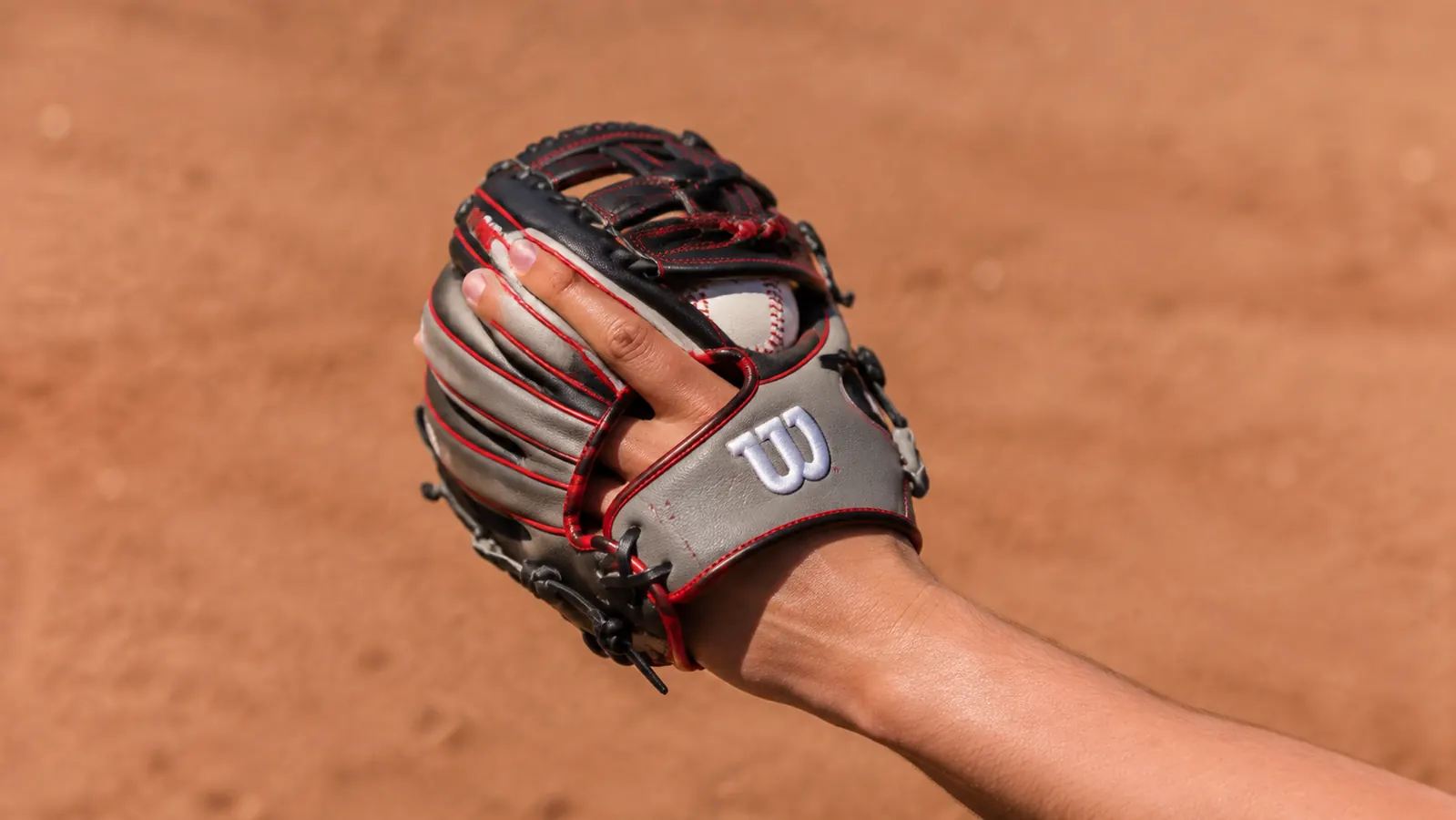
Rawlings Pro Grade leather is genuinely softer coming out of the box, and that's not marketing talk, you feel it the first time you flex it. A teammate's Heart of the Hide was catching real reps within two and a half weeks of regular use, playing catch every evening and running it through a glove mallet a couple times a week. My son's A2000 took closer to five weeks before it stopped feeling stiff at the base of the fingers. If your kid is starting a new position mid-season, or you bought the glove three weeks before a big tournament, that faster break-in is not a small thing.
The lighter overall weight is the second real advantage, especially for outfielders and middle infielders who are making a lot of quick transfers. A few ounces doesn't sound like much until your kid is playing a 7-inning game in July and their glove hand is dead by the fifth. Two of the girls on my daughter's team play middle infield in Heart of the Hides specifically because the lighter feel lets them get the ball out of the glove a beat faster on double-play turns.
Rawlings also just gives you more choices if color and customization matter to your player. The build-your-own options run deeper than what Wilson offers on the A2000 line, and for a travel-ball kid who wants a glove that looks like nobody else's on the team, that flexibility is worth something even if it doesn't change how the glove fields a ground ball.
There's also a comfort factor that matters more than people admit. The softer leather means less hot-spotting on the palm during a long tournament weekend, especially for a kid who's catching bullpens or extra infield between games. My daughter's teammate, who plays four games some Saturdays, has never complained about her hand hurting in the Heart of the Hide the way a couple of the A2000 owners on our team did during their first month of breaking the glove in.
Want the glove built to outlast a full high school career, not just a season?
The Wilson A2000 costs more up front, but if your kid is playing infield year after year, the pocket structure and relace support make it the one you're not replacing in two years.
Amazon Check Today's Price on Amazon →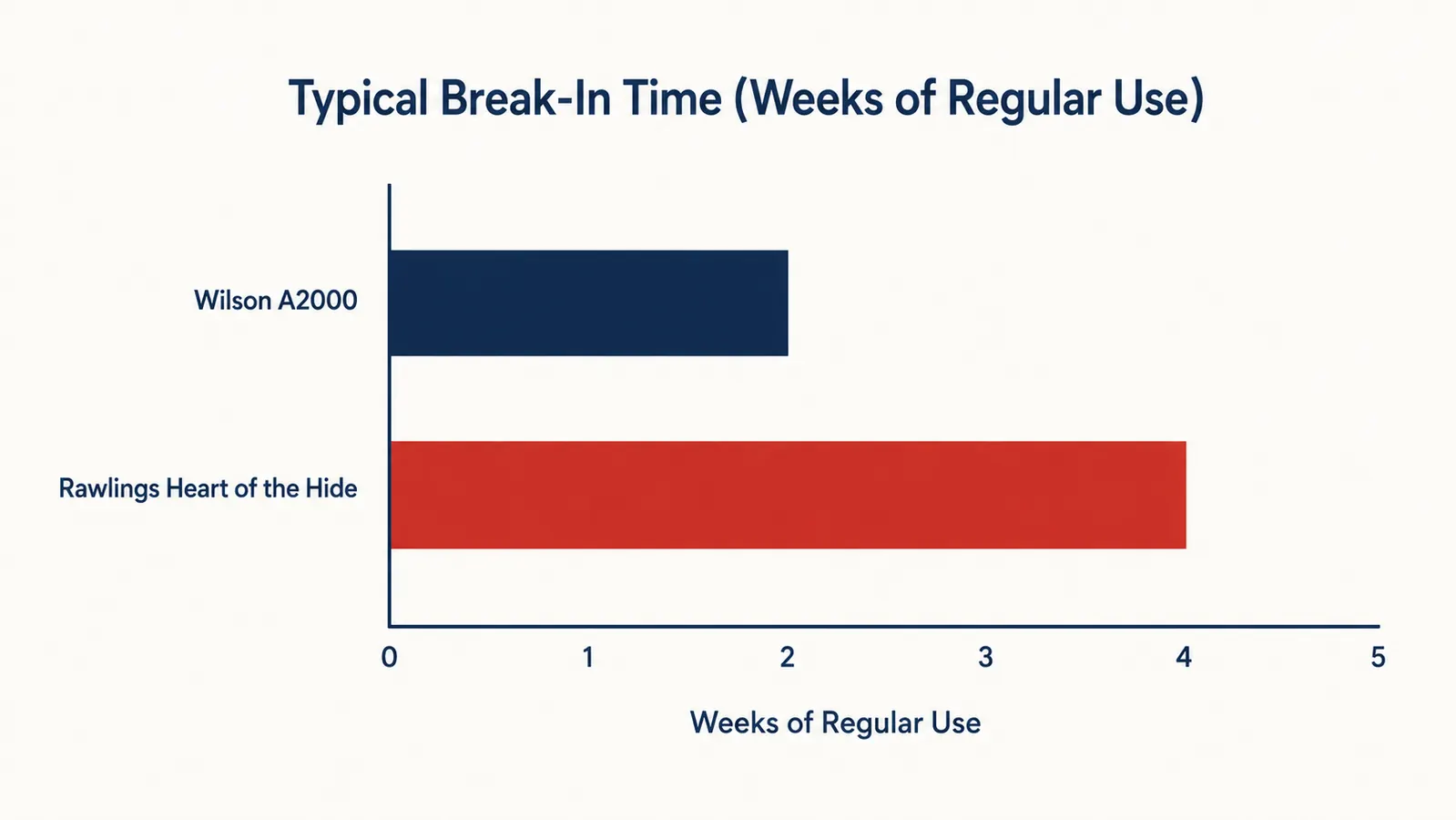
Break-In Time, Side by Side
I ran both gloves through the same routine so the comparison would actually mean something: shaving cream conditioner worked into the palm and fingers, a ball placed in the pocket and wrapped tight overnight for the first week, then daily catch and a glove mallet session three times a week. The Heart of the Hide was noticeably softer by day 10 and playing full reps in infield drills by day 18. The A2000 needed the full routine for closer to five weeks before the fingers stopped feeling stiff on a backhand stab.
Neither glove is ready for a game the day it arrives, and I'd be skeptical of anyone who tells you otherwise about a full-grain leather glove in this price range. But if your season starts in three weeks and you're buying new, that gap between two and a half weeks and five weeks is the difference between game-ready and still working through it on opening day.
Steaming speeds up both gloves if you go that route, but I'd be careful with it on either one. A pro shop steam-and-form session can shave a week or two off the A2000's break-in, but it also voids some of the natural stiffness that gives the glove its long-term structure. I stuck with the slower hand method on both gloves for this comparison because that's what most parents are actually going to do at home, and it's the fairer test of how each leather behaves on its own.
Pocket Feel and Durability Over a Full Season
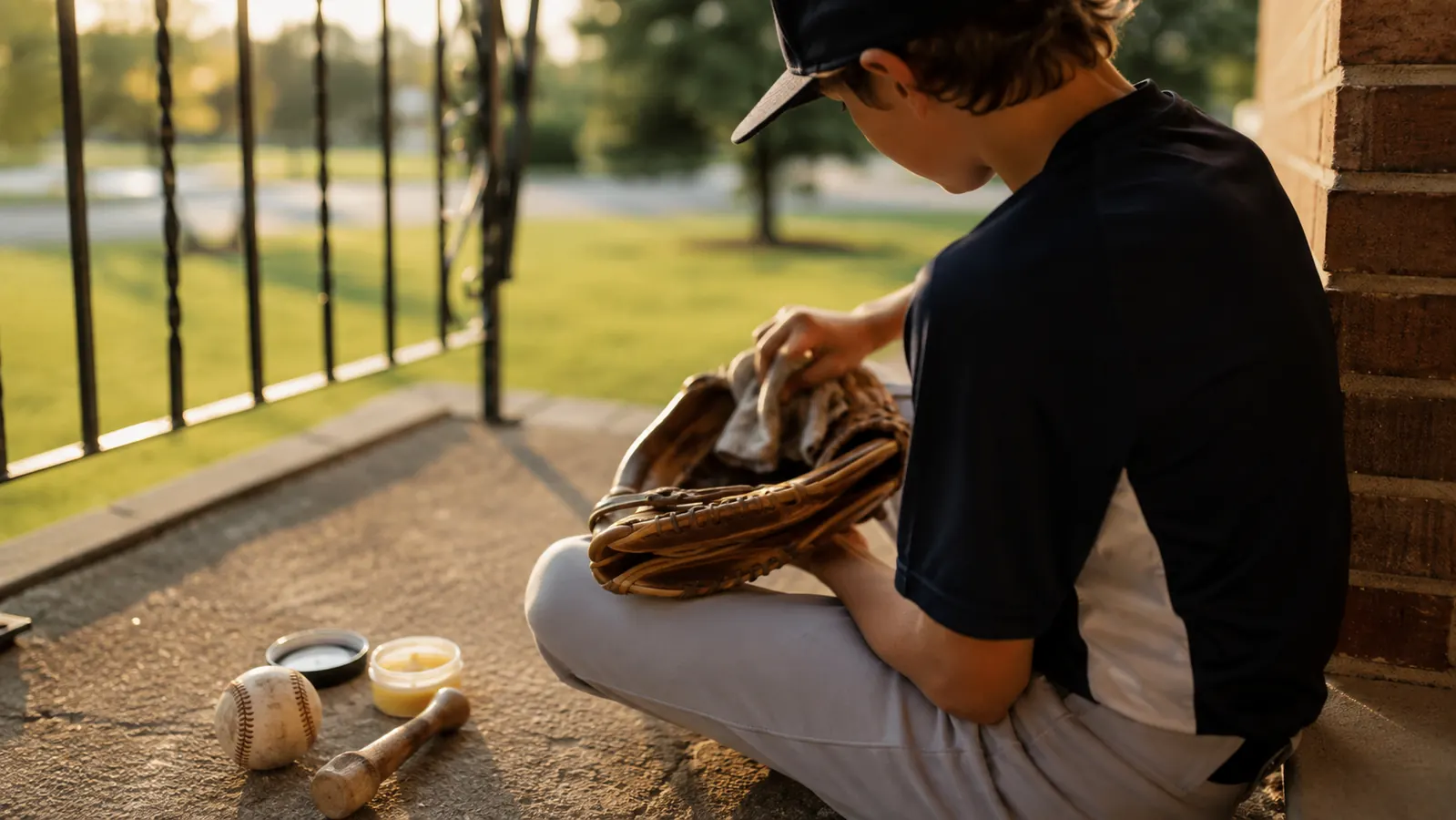
Where the A2000 pulls back ahead is what happens after the break-in period ends. The deeper, more pre-shaped pocket on the A2000 stayed noticeably firmer through a full spring season of daily infield work. The Heart of the Hide's pocket, while excellent early on, softened up a bit more by August, especially for the player on our team who was using it at short every game. It still caught everything fine, it just didn't have quite the same snap it had in March.
This is the tradeoff in one sentence: Rawlings gets you game-ready faster, Wilson holds its shape longer. If you're buying a glove your kid will use for one travel season and then size up out of, the faster break-in probably matters more. If you're buying a glove that needs to survive three or four years of the same position, the A2000's structure is the better long-term bet.
Stitching held up well on both gloves through the season, no loose laces or blown seams on either one, which is the baseline I'd expect at this price point. The real difference was in the palm liner. The A2000's liner still felt tight and supportive after a full spring, while the Heart of the Hide's liner had loosened slightly, which you could feel as a little more give when squeezing the glove closed on a tough short-hop.
Who Should Buy Which
Buy the Wilson A2000 if your player is settled at one infield position for the next few seasons, you have at least a month before the season starts to break it in properly, and you'd rather do the work up front for a glove you're not replacing anytime soon. It's also the better pick if you want an easy path to professional relacing down the road.
Buy the Rawlings Heart of the Hide if you need a glove that's usable within a couple weeks, your player is at outfield or middle infield where the lighter weight actually shows up in late-game fatigue, or you want more say over the color and web pattern. It's a genuinely great glove, it just plays a slightly different game than the A2000 does.
Price is close enough between the two that I wouldn't let it be the deciding factor on its own. What I would factor in is how often your player is switching positions or gloves year to year. A rec-league kid who's still growing into a permanent position and might size up in a year or two is probably fine with either glove, since neither one will be outgrown before it's outgrown its usefulness. A committed travel infielder who's staying at one position through high school is the player who benefits most from the A2000's longer-term structure.
If you're leaning toward the glove built to hold its pocket for years, not months
The A2000 isn't the faster break-in, but it's the one coaches keep recommending for a reason. See today's price and current color options on Amazon.
Amazon Check Today's Price on Amazon →