
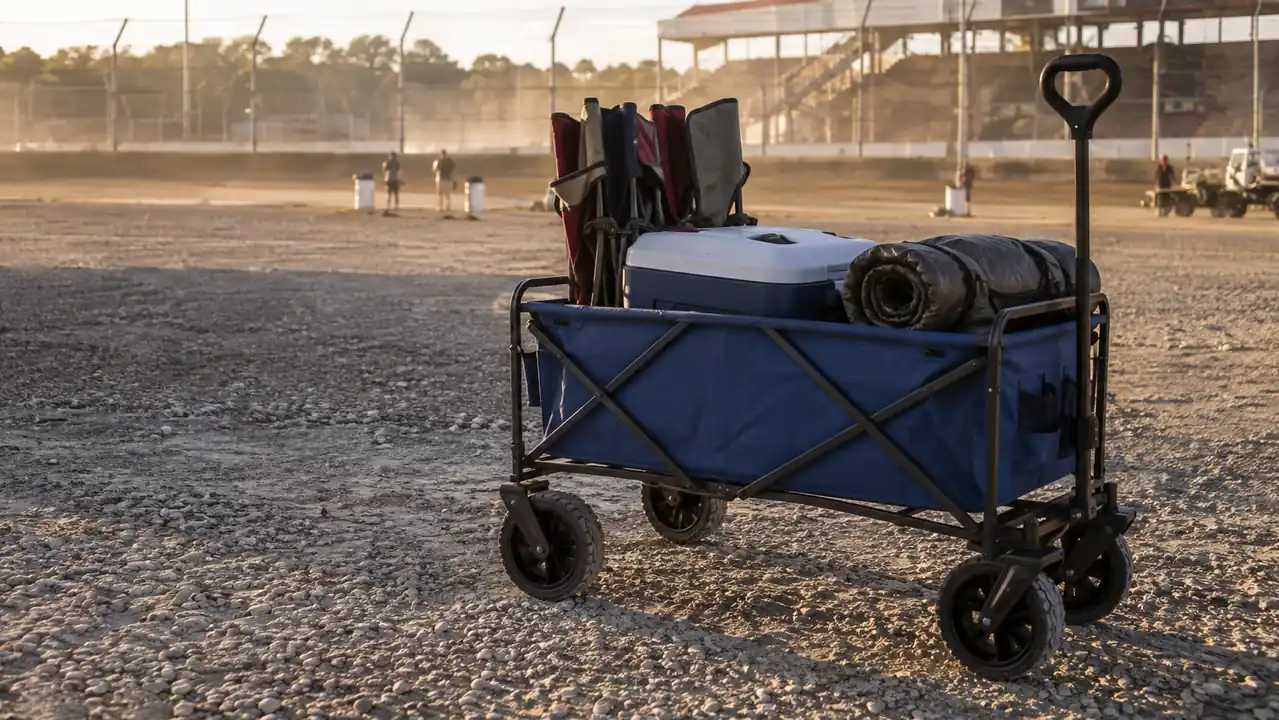
I bought the Mac Sports folding wagon in the middle of March, and the reason had nothing to do with racing. My nephew Deacon, who's 13 and catches for his travel team, needed someone to haul his gear bag on the Saturdays his parents were both working, and a 13-year-old catcher's bag with the chest protector, shin guards, and helmet stuffed inside is not something you casually carry across two parking lots and a patch of outfield grass. I looked at a few options and landed on the Mac Sports because of the steel frame and the 150-pound capacity rating, which sounded like overkill for one gear bag but meant I'd never have to think twice about what I loaded into it. What I didn't expect was that by June the same wagon would be living in the back of my SUV full time, because it turned out to be exactly as useful for hauling a cooler and two chairs across a gravel lot at the two or three races I get to most summers.
This review covers both lives of that wagon: roughly a dozen Saturday mornings at Deacon's ballfield between March and June, and three separate race weekends from June through August where it hauled everything from a 48-quart cooler to a tailgate's worth of folding chairs. If you're comparing a folding wagon for ball field duty against one built for tailgating and race day, this is about as close as you'll get to a single wagon doing both jobs under real, repeated weight.
The Quick Verdict
A steel-frame folding wagon that genuinely handles both a catcher's gear bag on grass and a loaded cooler on gravel, with wheels that held up better than I expected and a fold that's actually trunk-friendly.
Amazon Check Today's Price →Stop making two trips from the car when one wagon load would do it.
Between ballfield gear and race-day coolers, I was making three trips across a parking lot before I owned one of these. A 150-pound capacity steel frame ends that in one pull. Check today's price and current availability on Amazon.
Amazon Check Today's Price on Amazon →How I've Used It
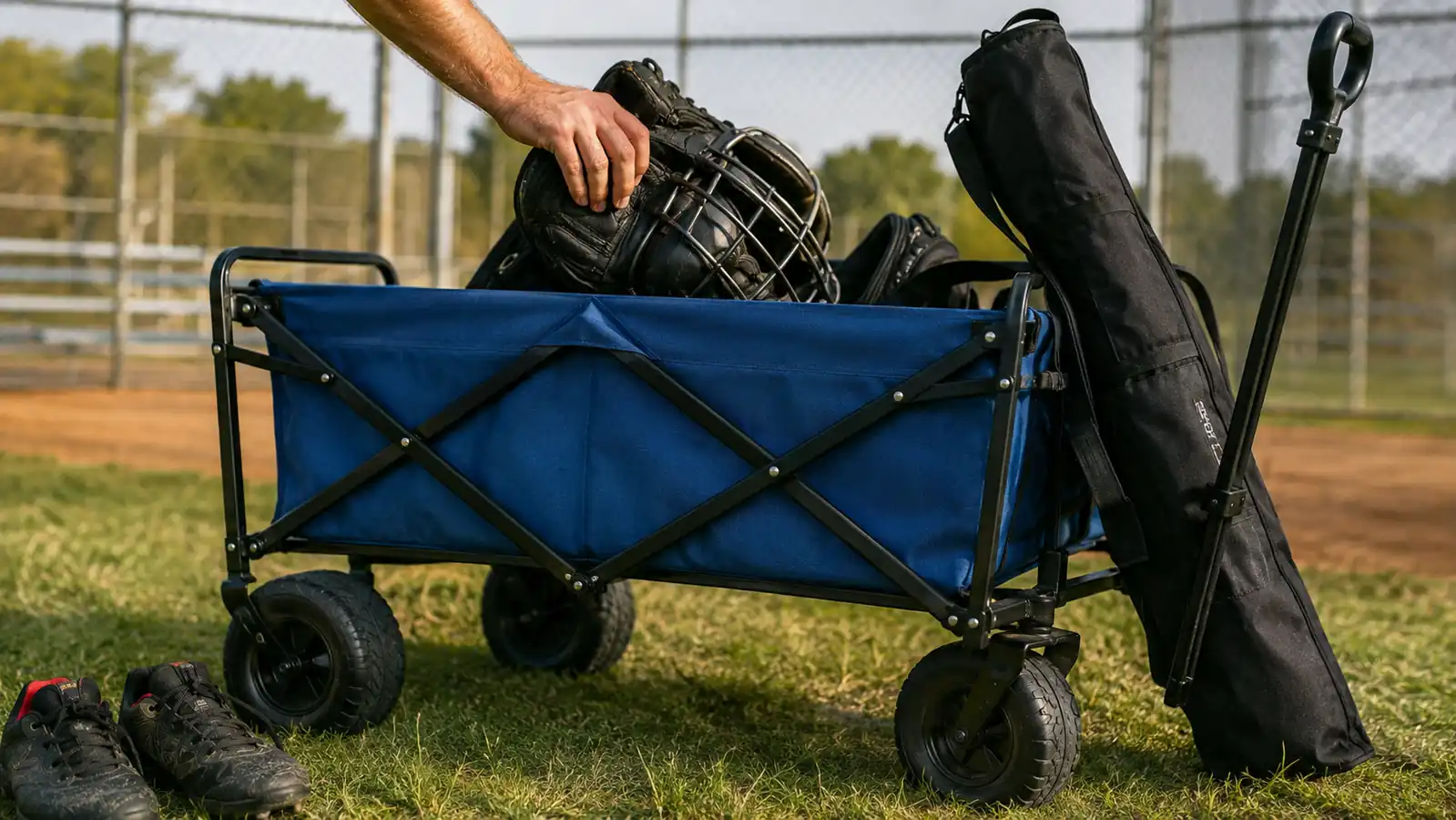
The first stretch of use was straightforward and low-drama. I'd pick Deacon up, throw his catcher's bag and my own son's bat bag into the Mac Sports wagon bed in the driveway, and roll the whole thing to the trunk without lifting either bag by hand. At the field, it was maybe forty yards of grass from the parking area to the dugout, and the wagon's big wheels handled that without sinking or catching on the uneven spots near the fence line where the grass thins out. Deacon's gear alone is probably 25 to 30 pounds once you add the bag itself, and it never came close to testing the frame's actual limit.
The race-day use started almost by accident. I was loading my truck for a Saturday night at a local dirt track in June and realized the wagon was still sitting in the garage from the ball season, so I threw it in instead of making my usual two trips with a cooler in one hand and chairs under the other arm. That one decision changed how I pack for every race weekend since. A loaded 48-quart cooler plus two folding chairs and a small tarp comes in somewhere around 55 to 60 pounds by my rough estimate, and the wagon pulled it across a gravel lot from the truck to our usual spot on the fence line without any real strain on my part.
Over the full stretch from March to August, I'd estimate somewhere close to 20 total uses between the two purposes, which is more real-world load-bearing than most people will put a folding wagon through in a full year. That's the window this review is actually built on, not a single afternoon of pulling it around an empty driveway.
The Frame, the Bed, and What 150 Pounds Actually Means
The steel frame is the part that sold me in the first place, and it's held up exactly the way I hoped. The side rails are rigid enough that I never worried about a gear bag or cooler shifting the frame out of square, even when I loaded things unevenly, like the time I had Deacon's bag on one side and a bat bag plus a batting helmet bucket on the other. The fabric bed sags a little under real weight, which is normal and expected, but the steel understructure keeps everything level enough that nothing tips.
I never got close to testing the full 150-pound rating, and honestly most people won't. My heaviest single load, the cooler plus chairs plus tarp at the track, topped out somewhere in the 60-pound range, and the wagon pulled that with room to spare. What the higher capacity rating buys you in practice isn't hauling right up to the limit, it's the fact that the frame doesn't flex or creak under a moderate 40 or 50 pound load the way a lighter, cheaper wagon does. There's a real difference between a wagon rated for 150 pounds handling 50 pounds effortlessly, and a wagon rated for 75 pounds handling that same 50 pounds while groaning about it.
Wheels on Grass, Gravel, and Pavement
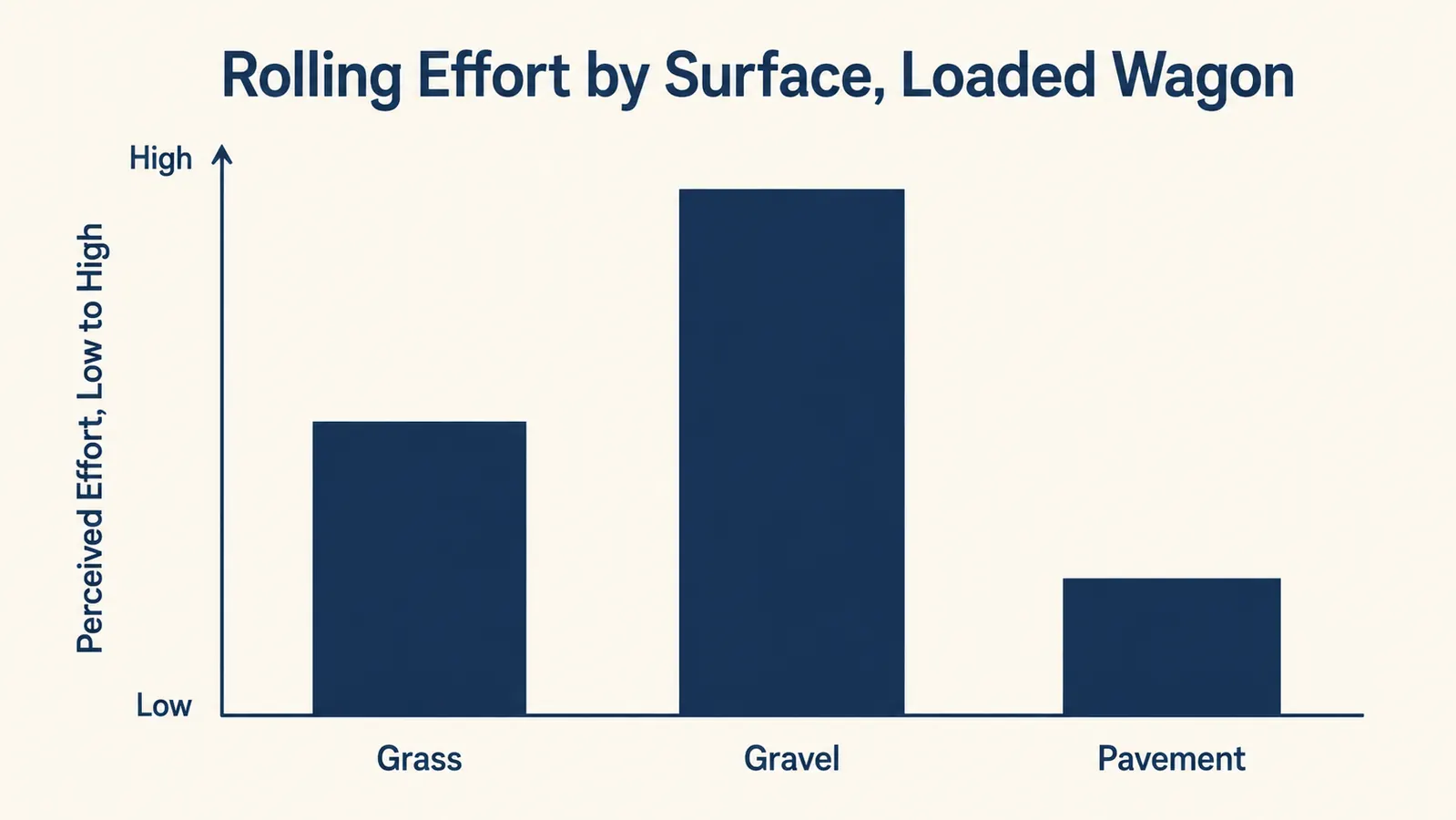
This is the section I paid the closest attention to, because the wagon's two jobs put it on completely different surfaces. On mowed ballfield grass, the wheels rolled smoothly with almost no resistance, even loaded with Deacon's gear and a second bag. The wheels are wide enough that they didn't dig into the softer patches near the outfield fence after a rainy week, which is where I expected trouble and didn't get any.
Gravel lots at the track are the harder test. Loose gravel wants to grab a narrow wheel and either stop it dead or send it sideways, and I did feel more resistance pulling a loaded wagon across a gravel lot than I did across grass, enough that I noticed it in my arm by the end of a 100-yard pull to our spot. It never got stuck and I never had to lift a wheel free of a rut, but I'd call gravel the surface where this wagon works hardest for its money, not the surface where it shines. Pavement, when we've parked close enough to a paved access road at a track, was the easiest surface by a wide margin, predictably smoother than either grass or gravel.
None of that changes my overall opinion of the wagon, but it did change how I plan a race weekend. I now try to park as close to a gravel-to-pavement transition as I can, purely because I know that last stretch of loose gravel is the part where I'll actually feel the weight.
The Fold, the Trunk, and Whether It's Actually Portable
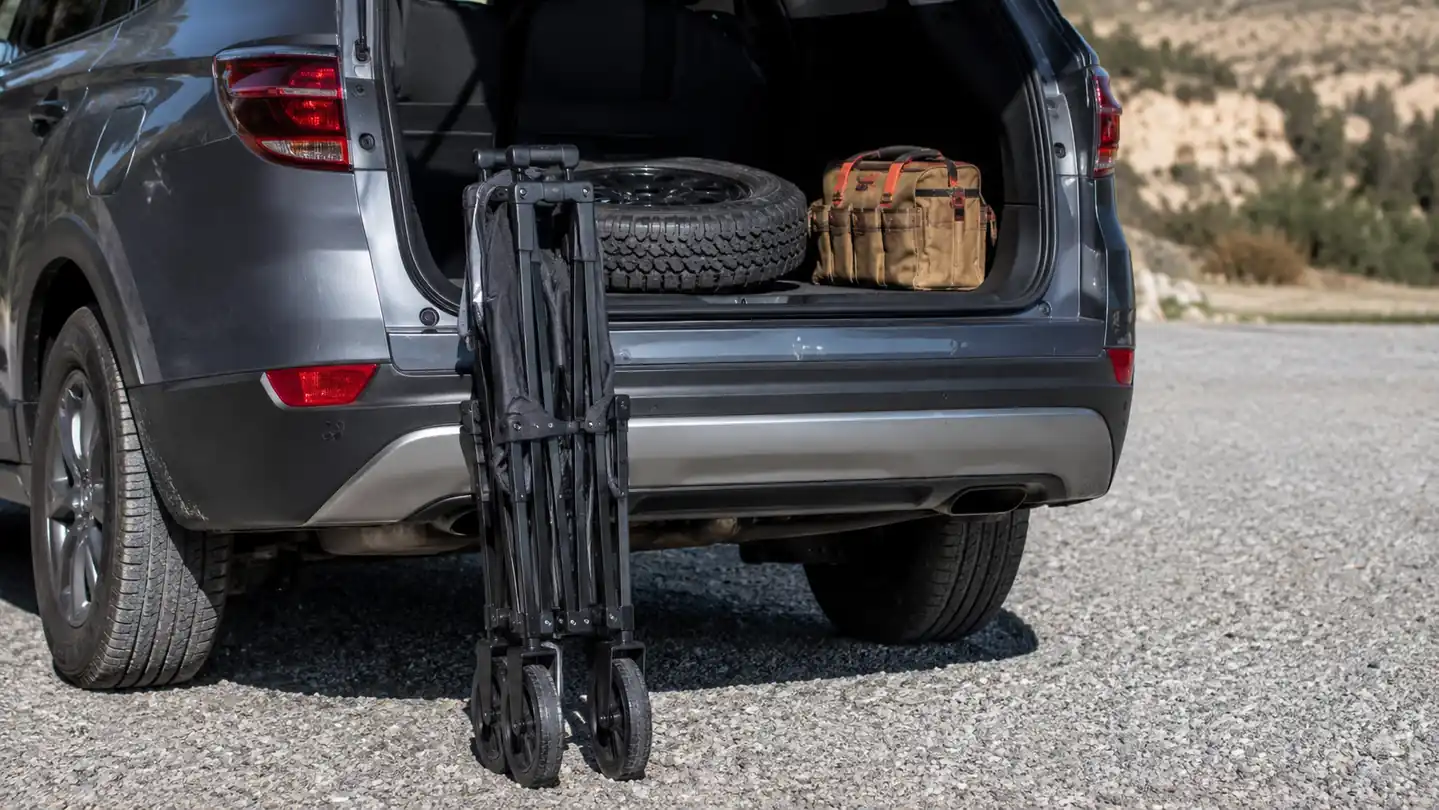
A folding wagon only earns its name if the folding part is actually easy, and this one mostly delivers. Collapsing it down takes releasing a couple of latches and pushing the frame together, maybe 20 seconds once you've done it a handful of times. My first attempt in the driveway back in March took closer to two minutes because I was fighting the mechanism instead of working with it, so there's a small learning curve, but it's a short one.
Folded down, it collapses into a flat, narrow shape that slides into the trunk of my SUV alongside a cooler and doesn't eat the whole cargo area the way I feared it might. It's not going to disappear into a sedan trunk next to a full set of luggage, but for anyone hauling a truck bed or an SUV to games and races the way most people in this niche already do, trunk space was never actually a problem across the whole season.
What Actually Broke First
Nothing failed outright over the six months, but I did notice wear in one specific spot: the front swivel wheel assembly picked up a slight wobble sometime around race weekend number two, which I'd guess is a combination of the gravel lots and the fact that I occasionally yanked the wagon over a curb edge instead of lifting the front wheels over it like I should have. The wobble hasn't gotten worse since, and it doesn't affect how the wagon tracks or pulls, but it's the one part I'd point a new buyer toward keeping an eye on, especially if gravel lots and curb cuts are a regular part of your routine.
The fabric bed also picked up a couple of small scuffs from cleats and a cooler corner, purely cosmetic, and one of the side mesh pockets stretched out slightly after I overloaded it with ice packs at a race in July. Neither issue affected function. For a wagon that spent a summer bouncing between a ballfield and a dirt track, I expected more wear than I actually got.
Alternatives I Looked At
Before buying, I looked at a few other folding wagons in the same general price range, including the Timber Ridge, which a buddy at the track already owns and swears by for tailgating. I put together a full side-by-side on how it compares to the Timber Ridge wagon, but the short version is that the two are closer in capability than the marketing suggests, and the deciding factors end up being wheel size, fold mechanism, and whether you want a removable bed liner. I also seriously considered a smaller, cheaper wagon meant purely for beach trips, but the lighter frame and lower weight rating made it a poor fit once I knew this wagon was going to do double duty on gravel.
What I Liked
- Steel frame never flexed or creaked under real loads up to about 60 pounds
- Wheels handled ballfield grass with almost no resistance
- Folds down in about 20 seconds once you know the mechanism
- Folded shape fits an SUV trunk alongside a cooler without eating the whole cargo area
- Held up across roughly 20 uses over six months with only cosmetic wear
Where It Falls Short
- Gravel lots take noticeably more pulling effort than grass or pavement
- Front swivel wheel developed a slight wobble after curb-edge use
- Side mesh pocket stretched out under a heavy ice pack load
- Never tested near the full 150-pound rating, so that ceiling is untested by me
- Learning the fold mechanism takes a couple of tries the first time
It went from hauling a catcher's bag across outfield grass in March to hauling a cooler across a gravel lot in July, and the only real difference I noticed was how much harder gravel pulls on my arm.
Who This Is For
If you're already living the crossover life this site is built around, hauling gear to weekend ball games and hauling a cooler and chairs to a track a couple times a summer, this wagon covers both jobs without making you own two separate pieces of equipment. Anyone tired of making multiple trips from the car, whether it's a catcher's bag and a bat bag or a cooler and camp chairs, is exactly who this was built for. It's also a smart pickup if you're already convinced why every tailgater needs one, since the steel frame handles the heavier, awkward loads that tailgating tends to produce better than a lighter beach-style wagon.
It's a strong fit for a parent doing carpool duty for a kid's gear, or a family that tailgates or camps trackside a few times a season and wants one wagon that can do double duty instead of buying separate gear for each hobby.
Who Should Skip It
If your hauling is limited to smooth, paved lots and light loads under 20 pounds, a cheaper, lighter wagon will do the job for less money and less bulk in your trunk. I'd also skip it if you're regularly crossing deep sand or very soft, wet grass, since the wheels are built for grass, gravel, and pavement, not the specialized terrain a beach-specific wagon with balloon tires is designed for. And if trunk space is genuinely tight, a sedan with a full back seat, it's worth measuring your cargo area before buying, because the folded shape, while manageable, still takes a real footprint.
Six months and roughly 20 loads later, this is still the wagon that lives in my trunk between seasons.
Whether it's a catcher's bag on Saturday morning or a cooler at a Saturday night race, one wagon has covered both all year. Check today's price and current stock on Amazon.
Amazon Check Today's Price on Amazon →