
I bought my Louisville Slugger Meta BBCOR after reading a stack of forum threads that all said basically the same thing: best BBCOR barrel on the market, buy it and stop thinking about it. So I bought it, and I loaned my nephew's old CAT8 to a buddy so I'd actually have to rely on the Meta for a full year. That's the part nobody selling you this bat tells you. A single glowing thread from a guy who took ten swings in a cage is not the same as a rec league schedule and a cold spring tournament.
This is the honest version. Not the version where every bat is the best bat you've ever swung, because that review gets written before the free sample even breaks in. I used two of these across two very different situations, my own Tuesday night adult league and my nephew Deacon's 16U travel season, and I'm going to tell you exactly where the Louisville Slugger Meta earned the hype and exactly where it didn't.
The Quick Verdict
A genuinely forgiving BBCOR barrel that lives up to the feel everyone raves about, but the grip wears faster than the price tag suggests it should, and cold weather takes a real bite out of the performance nobody warns you about.
Amazon Check Today's Price →Before you scroll through more forum threads, see the actual specs for yourself.
Check current sizing, weight drops, and today's price on the Louisville Slugger Meta before it's out of stock in the size you need.
Amazon Check Today's Price on Amazon →How I've Used It
My copy is a 34/31, standard drop 3, and it's spent the last twelve months in a bat bag that goes to a Tuesday night beer league called Ironhide and not much else. That's maybe 26 games, call it 130 to 150 competitive swings once you count batting practice before first pitch. Adult rec league isn't a stress test the way travel ball is, but it's real innings against real pitching, not cage rips off a tee.
The second data point is Deacon's. He's 16, plays a fall and spring travel schedule, and I bought him a 31/28 in the same model after he kept borrowing mine at family cookouts and refusing to give it back. His swing count over one spring season is closer to 400, across dry 80-degree afternoons and one memorably miserable 44-degree morning I'll get to in a minute.
Between the two of us, that's roughly a season and a half of honest, mixed-condition use. Not a lab test, not a single tournament weekend, and not a bat that sat in a closet between two hero swings for a YouTube video.
The sizing chart on the product page told us Deacon should be in a 32 based on his height, but he'd grown almost two inches over the winter and the wingspan-to-height ratio the chart assumes didn't quite hold. We ended up sizing down to the 31/28 after he tried a 32 at a batting cage and felt noticeably late on inside pitches. Charts are a starting point, not a guarantee, especially for a kid who's still growing mid-season.
I also made a point of not babying it. It rode in the trunk through a couple of hot July afternoons, got knocked around in a shared team bag more than once, and ate a handful of foul tips off the top hand during a round where I was deliberately trying to get jammed on inside pitches. None of that is a controlled test, but it's a more honest picture than a bat that only ever comes out for a single filmed session.
The Sound Everyone Talks About
Every review of this bat mentions the crack off the barrel, and it's real. On a squared-up ball, the Louisville Slugger Meta sounds and feels different from the alloy bats I grew up with. There's a solid, almost dead-center thump instead of the tinny ring some drop 3 bats give you, and that sound is genuinely part of why people love it. My teammates noticed before I said a word about the bat.
What the threads don't mention is that the sound changes your read on contact quality in a way that can fool you. A couple of times I was sure I'd smoked one based on the feel and the noise, and the ball died on the warning track. The bat gives you confident feedback, but confident feedback isn't the same as exit velocity, and I had to remind myself of that more than once.
Deacon ran into the same thing from the other direction. He hit a ball off the end of the barrel in a tournament game that sounded flat and wrong to him, the kind of contact that usually means a routine groundout, and it snuck through the left side for a single anyway. He came back to the dugout more confused than happy. The sound is a good general signal on this bat, just not a reliable one, and treating it as gospel will trip you up in either direction.
One of my Ironhide teammates plays wood almost exclusively and razzes me about the metal every time I step in. Even he admitted the Meta's crack sounds closer to a good wood bat than most alloy bats do, which is probably why the sound gets talked about so much online. It's a real point in the bat's favor, I just don't let it override what the flight of the ball actually tells me.
Cold Weather Changes Everything
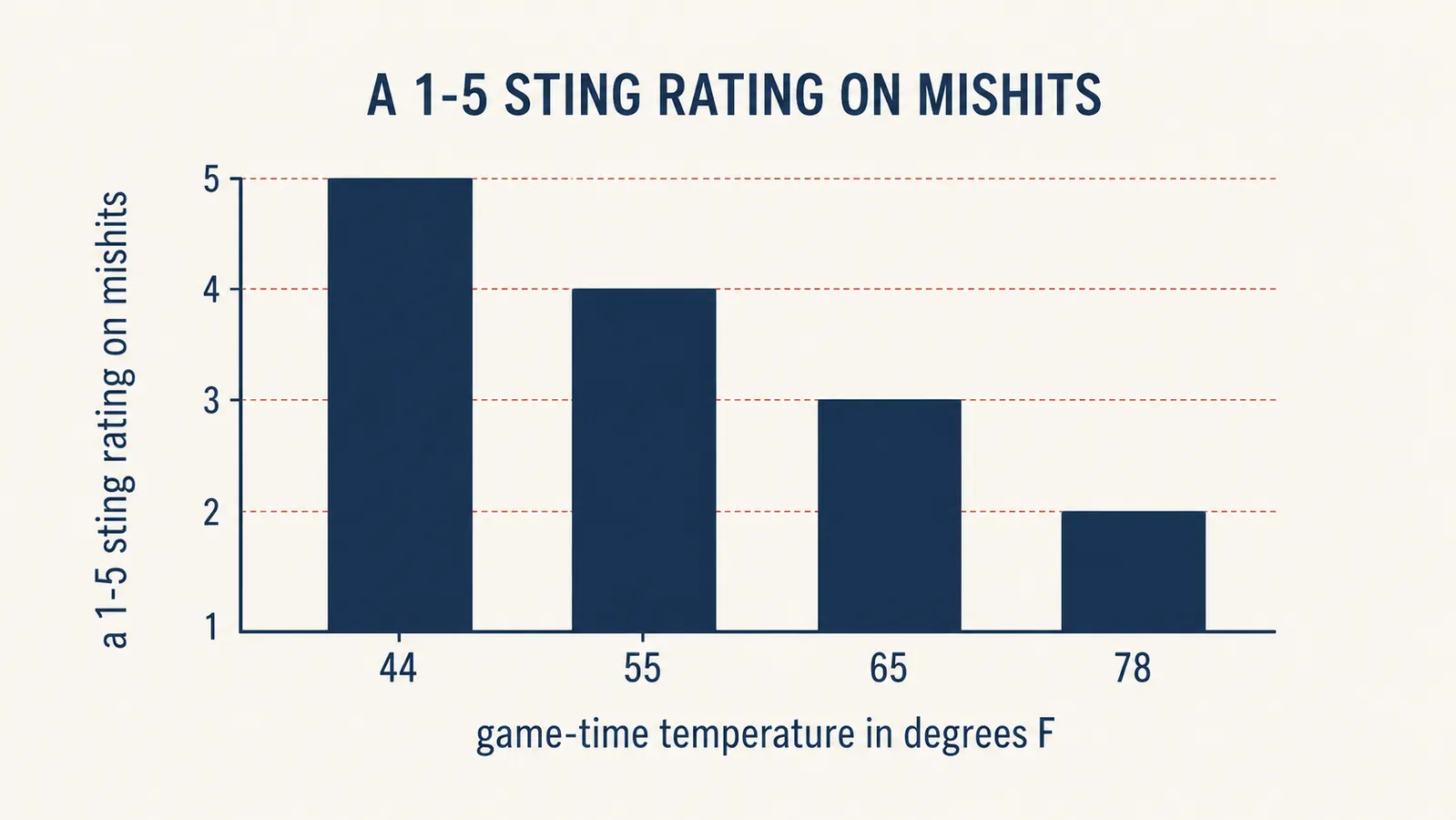
Deacon's team played an early tournament in April, first pitch at 44 degrees with a wind that made the flags snap sideways. He mishit two balls off the end of the barrel in that game, both jam shots on inside fastballs, and both times he came back to the dugout shaking his hand out and asking if the bat was cracked. It wasn't. It was just cold.
BBCOR bats in general sting more in cold weather, that's not unique to the Meta, but nobody selling this bat tells you the sweet spot forgiveness people rave about shrinks noticeably once the barrel gets cold. By the third inning, once his hands and the bat had both warmed up a little, the sting mostly went away and his contact felt normal again. If your season opens in cold weather the way a lot of northern travel schedules do, budget for a rough first few games with any BBCOR bat, this one included.
After that tournament we started keeping the bat bag in the dugout instead of leaving it in a cold trunk between games, and warming the barrel up with a few soft-toss swings before first pitch instead of going straight from the on-deck circle into live at-bats. It's a small habit, but it noticeably cut down on the complaining about stinging hands for the rest of that early spring stretch.
The Grip Doesn't Last as Long as the Bat
This is the complaint I see the least online and ran into the most. The factory grip on my 34/31 started shining and slipping under the bottom hand somewhere around game 20, well before the barrel showed any sign of wear. In a beer league where hands are already sweaty from work before the first pitch, that happened faster than I expected for a bat in this price range.
I ended up wrapping it with a Lizard Skins overgrip, which fixed the slipping completely and only cost a few dollars, but it's an added step nobody mentions when they're telling you this bat is worth every cent. Deacon's bat, used more often but by a kid whose hands sweat less mid-game, made it through the spring season before the grip started going the same way. Budget for a replacement grip in year one and you won't be caught off guard.
I've since started buying overgrips two at a time whenever I order batting gloves, because it turns out this isn't a one-time fix. The factory grip on any bat in this category seems to be treated as a placeholder rather than a long-term part, and once you accept that, it stops feeling like a defect and just becomes part of owning a BBCOR bat at any price point.
Forgiving Sweet Spot, Not a Magic Fix
The barrel forgiveness is the single most accurate claim in the marketing. Balls that would've been a weak dribbler off my old alloy bat came off the Meta with actual carry, even a half inch off center. That's not marketing spin, I felt the difference specifically on inside pitches I got jammed on, where the ball still found a gap more often than it should have.
But a forgiving sweet spot doesn't rescue bad mechanics, and it isn't a substitute for timing. I still popped up plenty of pitches I was late on, and Deacon still struck out looking at pitches he should have swung at. If you're buying this bat expecting it to fix an approach problem or a timing issue, it won't. It'll turn some near-misses into base hits, and that's a real edge, but it's a smaller edge than the hype videos imply.
The clearest example from my own season was a two-strike foul-tip-turned-single in the last regular game of the year, a pitch I was flat out fooled by and should have missed entirely. The bat bailed me out. That's the honest version of what a forgiving barrel does. It doesn't turn a mediocre swing into a great one, it turns a handful of bad swings into forgivable ones, and over a full season those handfuls add up.
Who's Actually Paying for This Bat
Here's the part that got left out of every glowing review I read before buying mine. If you're playing once a week in a casual rec league, the jump from a mid-tier alloy bat to the Meta is noticeable but not transformative, and the price gap is real money for a bat that spends most of its life in a closet. I don't regret buying mine, but I also can't tell you it made or broke a single game for me.
For Deacon, playing three or four times a week with real scouting eyes in the stands some weekends, the calculation is different. More swings means more chances for that forgiving barrel to turn a mishit into a hit, and at that volume the price gap closes faster because he's actually using the bat enough to feel the difference start to add up across a season instead of across a handful of games.
There's also a resale angle worth being honest about. BBCOR bats hold value reasonably well in the local swap groups as long as the barrel isn't cracked and the grip is fresh, so even a casual player who tries it for one season and decides it isn't for them isn't out the full amount if they turn around and sell it. That's not a reason to buy it on a whim, but it does soften the downside if you're on the fence.
I've talked to a couple of other travel-ball parents at Deacon's games about this exact tradeoff, and the ones who regret the purchase almost always describe the same pattern: they bought the top-tier bat before the kid was playing enough games a week to justify it, then felt pressure to keep using it even after interest cooled off. Match the bat to the actual schedule in front of you, not the schedule you're hoping for next season.
What I Liked
- Barrel forgiveness on mishits is real, not marketing spin
- Sound and feedback on solid contact is a genuine confidence boost
- Balanced swing weight suits line-drive contact hitters
- Manufacturer warranty covers legitimate cracks and defects
- Holds decent resale value if the barrel and grip are kept in good shape
Where It Falls Short
- Factory grip wears out well before the barrel does
- Cold-weather games sting more than the reviews let on
- Overhyped by forum threads that ignore casual, low-swing-volume players
- Sound can trick you into misjudging contact quality either way
- Popular sizes sell out mid-season, so shopping around matters
The bat gives you confident feedback, but confident feedback isn't the same as exit velocity.
Who This Is For
This bat makes the most sense for a player taking several hundred competitive swings a season, travel ball kids, high school players, or adult league guys who play multiple nights a week rather than one. If you're already comfortable with a balanced swing and want a barrel that rewards near misses instead of punishing them, the Meta earns its spot in the bag, and it's held up well enough across a season and a half that I'd buy it again for either of us.
Who Should Skip It
If you're playing one casual game a week and your current bat isn't cracked or dented, I'd hold off. The upgrade is real but it's incremental at that swing volume, and you'll feel the grip wear out well before you've logged enough swings to notice the barrel difference the forums keep talking about. Put the money toward more reps instead, and revisit the bat once you're actually playing enough to feel the gap.
Skip the forum guesswork and check the real numbers.
See current sizing, availability, and today's price on the Louisville Slugger Meta before your size sells out.
Amazon Check Today's Price on Amazon →