

My backswing has always wanted to go faster than the rest of my swing can keep up with. I'll take the club back in what feels like half a second, arrive at the top with no real load built up, and then have to yank the downswing to make up for it. Two lessons over the years fixed it for about three rounds each, and then the rush came right back because nothing between lessons was actually training the tempo itself, it was just me trying to remember a swing thought under pressure.
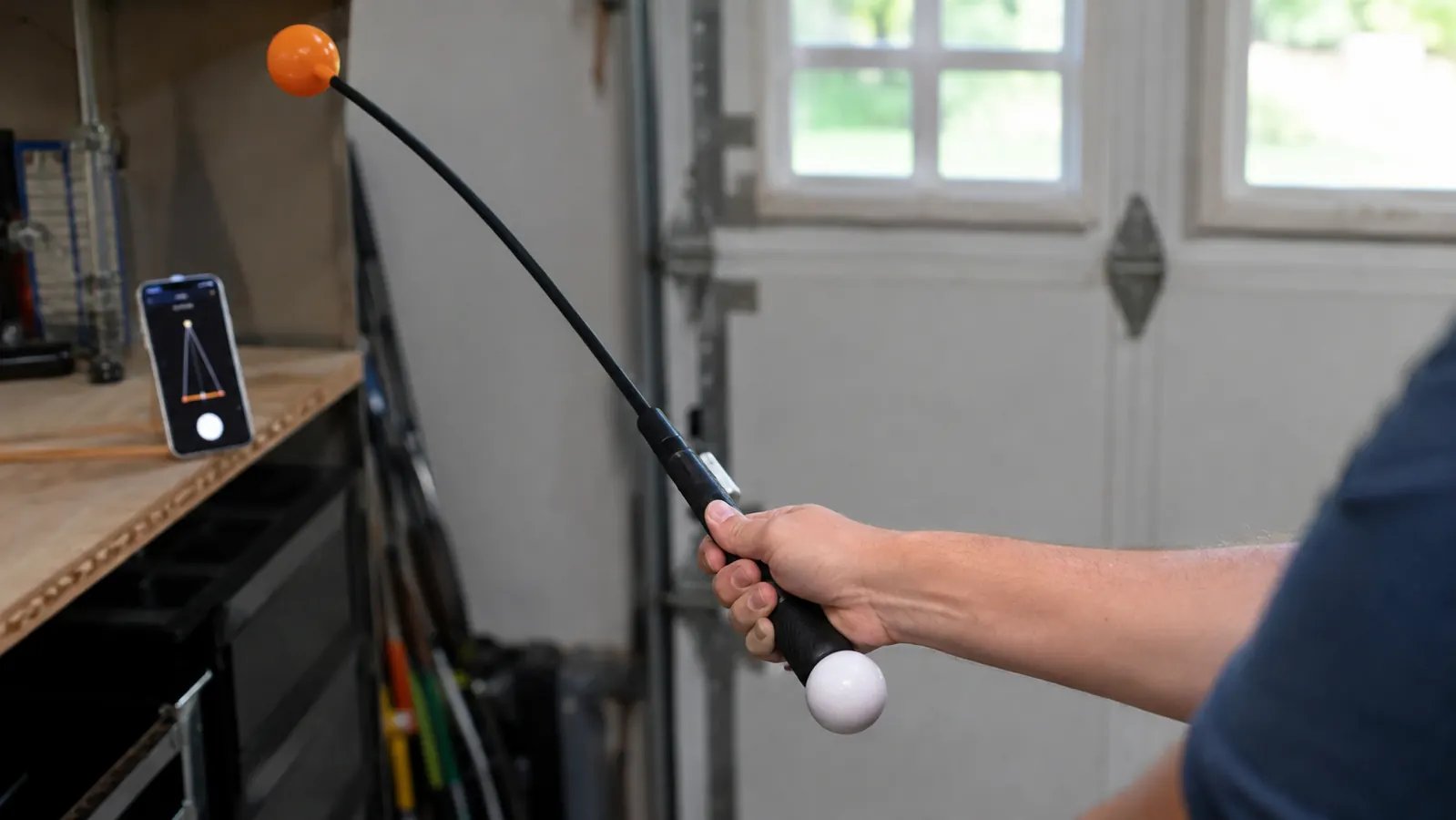
The Orange Whip swing trainer is the tool that finally made tempo something I could practice on purpose instead of something I hoped a swing thought would fix on the course. But buying one and swinging it around the garage a few times a week isn't a routine, it's a habit that fades in a month. What actually moved the needle was treating it like a real training block: a tempo ratio to count, a rep structure, a way to warm up before a round versus train between rounds, and a way to know when a rep was good or bad without needing a launch monitor.
Your tempo problem starts at the top of the backswing, not the downswing
A weighted swing trainer like the Orange Whip won't cooperate with a rushed takeaway, which forces the fix to happen before you ever hit a ball.
Amazon Check Today's Price on Amazon →Step 1: Learn the 3-to-1 Ratio Before You Ever Pick Up the Trainer
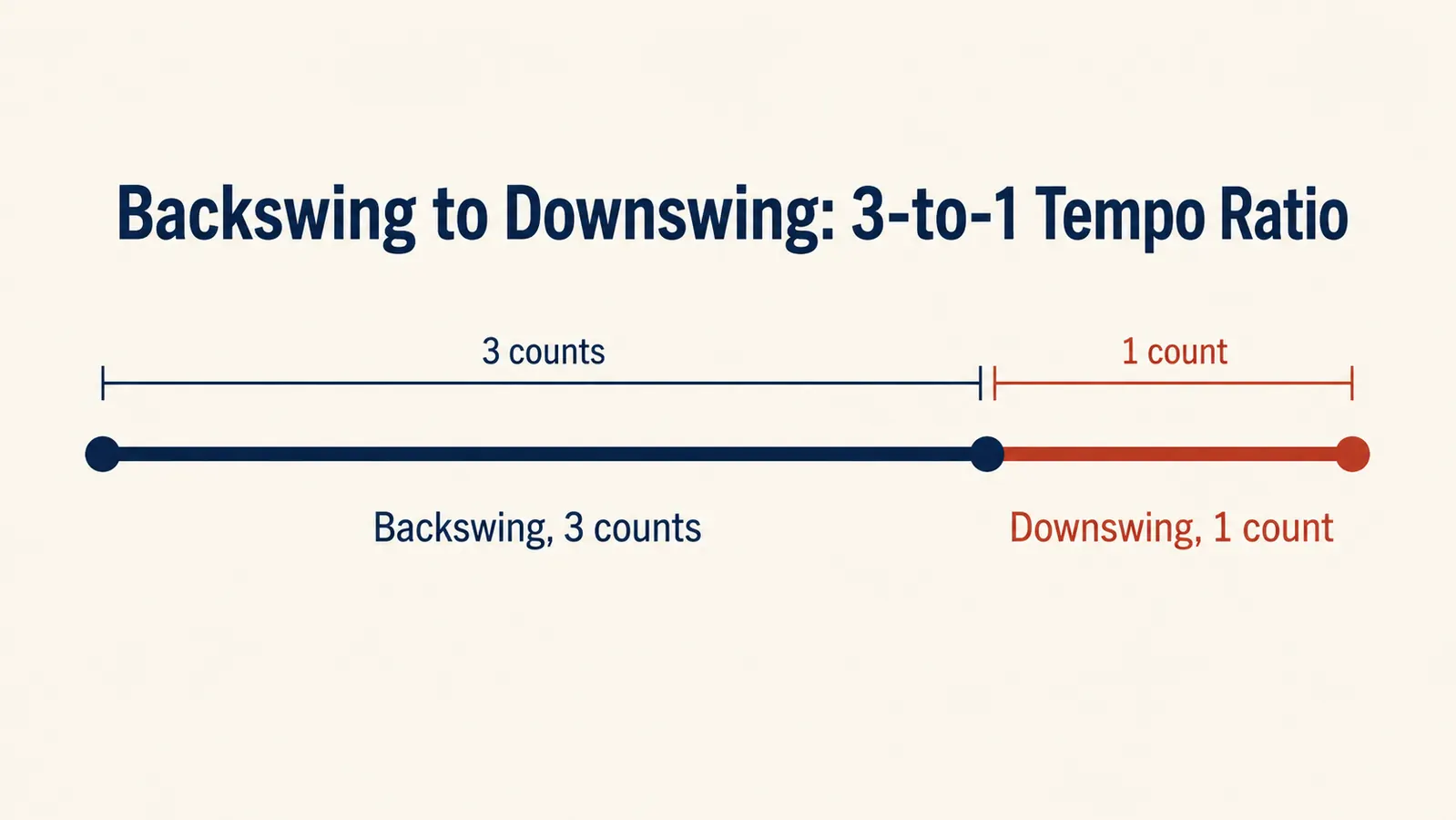
Good tempo is usually described as roughly three units of time for the backswing to one unit for the downswing. That number means nothing until you can actually feel it, and you can't feel it with a real club because contact happens too fast to self-correct in the moment. Before I ever swing the Orange Whip trainer, I say the cadence out loud a few times standing still: 'one, two, three' on the way back, 'one' on the way down. It sounds silly in an empty garage, but saying it out loud forces a pace that just thinking it never does.
Once the cadence feels natural standing still, I add the Orange Whip trainer. The counterweighted head won't load properly if the backswing count gets rushed to 'one, two' instead of a full 'one, two, three', and you feel that immediately as a wobble at the top instead of a smooth load. That mismatch between what you meant to do and what the weight tells you is doing is the whole point of starting here before adding any speed.
I spend the first week of any tempo reset doing nothing but this counted cadence, slow, no attempt at a real golf swing yet. It feels like a waste of five minutes until the count stops needing to be said out loud and just becomes the pace your arms want to move at. That's the signal to move to Step 2.
The mistake I made the first time around was skipping this step entirely and going straight to full swings, figuring the counterweight would teach me the ratio on its own without any counting involved. It didn't. Without the counted cadence to anchor the pace, I just found a new, still-rushed rhythm that felt fine to me and wobbled the trainer just as badly as my old swing did. The count isn't optional busywork, it's the reference point everything else in this routine gets checked against.
Step 2: Warm Up With It Before Every Round, Not Just Between Rounds
There's a real difference between using a swing trainer to warm up right before you play and using it to train tempo between rounds during the week, and mixing the two up is where a lot of people waste the tool. Before a round, the goal isn't building anything new, it's waking up the same tempo you already trained and getting your body moving through the full range of motion before the first tee shot matters.
My pre-round routine is short on purpose: fifteen reps counting the 3-to-1 cadence out loud or under my breath, split evenly between a normal grip and a slightly wider stance to open the hips up. I do this in the parking lot or near the practice green, standing with about eight feet of overhead clearance and six feet on either side, since the trainer's shaft is long enough that a careless backswing can clip a cart or another golfer if you're not paying attention to the space around you.
I don't try to fix anything new in this window. If my tempo feels off during the warmup, I just slow the count down further rather than adding extra reps or extra thinking. The pre-round warmup exists to remind the body of a pace it already knows, not to teach it a new one under time pressure with a tee time approaching.
A good sign the warmup worked is that the first real practice swing with an actual club, no ball, feels noticeably slower off the top than it would have without the fifteen reps. If the first tee shot still feels rushed after the warmup, I've learned to just add five more slow reps rather than assuming the round itself will smooth it out. It usually doesn't, it just compounds.
Step 3: Build a Rep-Based Routine Between Rounds
Between rounds is where the actual training happens, and it works better as a rep count than a time count. Five minutes of swinging can mean twelve careful reps or forty rushed ones depending on how much you're paying attention, and only the careful reps are doing anything. I run three sets of ten reps, three days a week, with about thirty seconds of rest between sets, which is enough that I'm not rushing set two just to get done.
Each rep gets the full counted cadence, and I stop the set the moment reps start feeling rushed or sloppy, even if that's rep six instead of rep ten. Ten sloppy reps train the wrong tempo just as effectively as ten good reps train the right one, so quality controls the set length more than the number on the counter.
I keep the trainer standing by the garage door specifically because a tool you have to dig out of a closet doesn't get used on a Tuesday night after work. Location matters more than most people give it credit for. Mine lives where I see it every time I pull my car in, which is the only reason three sets a week actually happened past the first two weeks.
The rep count doesn't need to grow much over time either. I've kept the same three sets of ten since the first month, and the only thing that's changed is how the reps feel, not how many of them I do. Adding volume for its own sake, forty or fifty reps a session, just invites the fatigue that makes the last third of any session sloppy anyway.

Step 4: Add a Metronome for Feedback You Can Trust More Than Feel
Counting out loud works, but it drifts. After a few reps my internal count tends to speed up without me noticing, especially once I'm tired or rushing to finish a set before dinner. A simple metronome app fixes that by setting an external pace I can't argue with. I set mine to a click for the top of the backswing and a second click three beats later for impact, which locks the 3-to-1 ratio to something outside my own head.
Any basic metronome app works for this, you don't need anything golf-specific. I just set the beats-per-minute low enough that three full beats of backswing feels controlled rather than frantic, somewhere in the 50 to 60 bpm range for me, and I adjust it session to session depending on how fast I've been rushing lately. If I catch myself consistently beating the second click, that's the tell that I need to drop the bpm further, not push through it.
I use the metronome for one full set out of the three most sessions, as a check against drift rather than a permanent crutch. The goal is a tempo that holds up without an app playing in your ear, since there's no metronome on the first tee. The click is training wheels, not the destination.
On days I don't feel like fumbling with my phone in the garage, I'll go back to the spoken count instead, just louder and more deliberate than usual, treating my own voice as the metronome for that session. It's not as precise as an app, but the point of the whole step is catching drift before it becomes the new normal, and either method does that if you're actually paying attention while you count.
Step 5: Progress From Slow-Motion Reps to Full Speed
Slow, counted reps build the ratio, but a real golf swing has to happen at real speed eventually, and this is the step people skip because it feels like undoing the careful work from the earlier weeks. I don't jump straight to full speed. Around week three I start alternating: two slow, fully counted reps, then one rep at roughly half speed while trying to keep the same 3-to-1 feel, then back to slow reps.
The flexible shaft on the trainer is doing the real coaching here. At half speed, if the tempo ratio breaks down, the head gets ahead of your hands and the whole swing feels like it's fighting you through the bottom. That feedback doesn't require a mirror or a coach watching, it just requires paying attention to whether the swing feels smooth or feels like a wrestling match on the way down.
Only after the half-speed reps feel controlled for a full week do I let a session include full-speed swings with the trainer, usually five to eight of them at the end of a set rather than the whole set. Going from slow to full speed too early is the fastest way to rebuild the same rushed habit the whole routine was meant to fix in the first place.
The real test of this whole progression isn't a driveway rep at all, it's the next round. I'll pick one hole a round, usually a par 5 off the tee where a rushed swing costs the most, and just check in on tempo before I pull the trigger. If the training carried over, that swing feels the same unhurried way the slow reps did. If it doesn't, that's useful information for the next week's sets, not a reason to give up on the routine.
What Else Helps
Filming a few reps on your phone from behind, even just propped against a bag, catches things counting alone won't. I don't watch every session back, but once every couple of weeks I'll check whether the backswing on video actually matches the tempo I felt during the set, because feel and reality drift apart more than people expect.
Beyond that, I don't add much else to this routine. A metronome app and a phone propped on a shelf cover everything the trainer itself can't tell you on its own. I keep a short note in my phone with the date and how many sessions I actually completed that week, not because I need detailed numbers, but because the honest weekly count is usually the difference between a routine that's working and one that quietly stopped a month ago without me noticing.
I didn't build this routine to add distance. I built it to stop rebuilding the same rushed backswing every few months.
Tempo is trainable, but only with a routine behind it
The Orange Whip is the swing trainer this whole routine is built around, five minutes in the driveway and a rep count instead of a clock. Check today's price before you start your next training block.
Amazon Check Today's Price on Amazon →